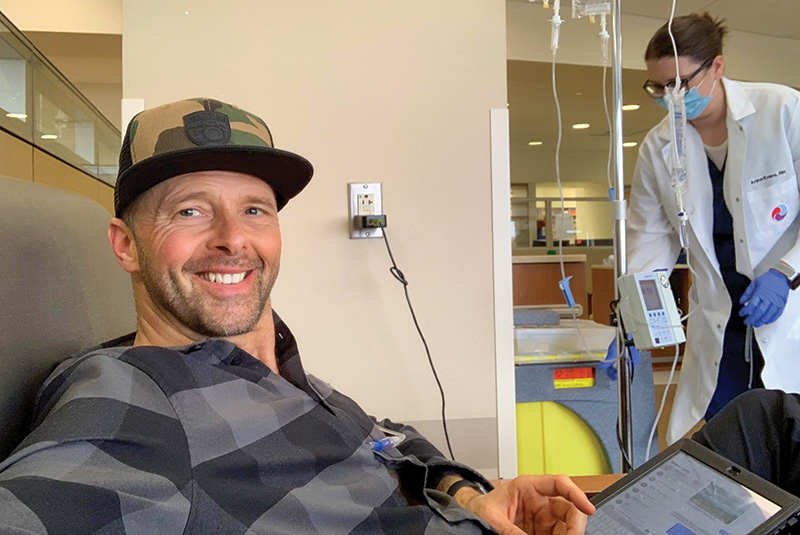
Craig Kooienga, the GCSAA Class A superintendent at Indian Trails Golf Course in Grand Rapids, Mich., receiving chemotherapy for colorectal cancer. Photos courtesy of Craig Kooienga
I have had the privilege of working in the golf course turf management industry for nearly 30 years, including the past 20 years as a golf course superintendent. Over that time, I have learned a great deal from fellow superintendents, mentors, specific situations on the job, books, seminars and the many people I have worked alongside.
All of those experiences shaped me professionally, but none provided greater clarity than being diagnosed, at 46, with Stage III colorectal cancer.
The diagnosis, in December 2019, came as a complete shock. I was healthy, physically fit and active. Just a few months earlier, I had completed my 12th half-marathon and, in the years prior, had completed multiple marathons and triathlons.
A week before my diagnosis, I had been skiing and remarked to friends that my body felt like a well-oiled machine. As my wife later reminded me, “Pride often comes before the fall.”
Following my diagnosis, I began treatment immediately — chemotherapy, followed by radiation therapy and then, ultimately, major surgery.
This story, however, is not about cancer. It is about how that experience reshaped my approach to leadership, decision-making and sustainability in the superintendent profession.
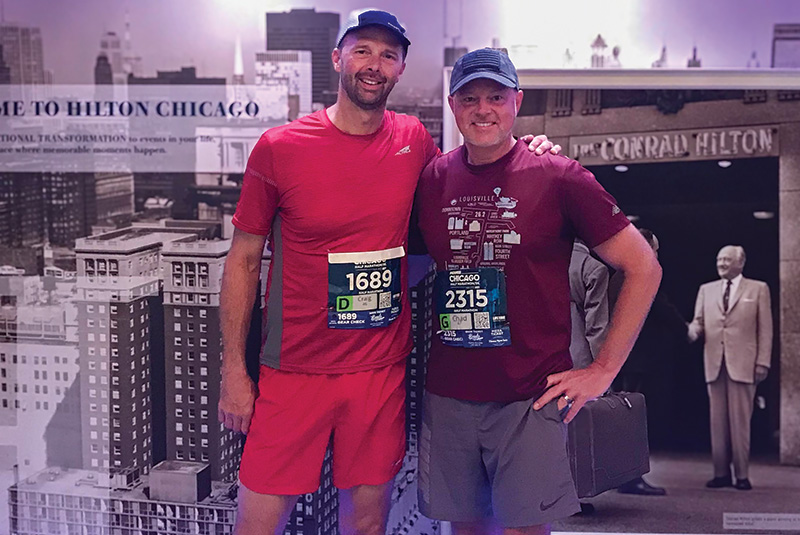
Kooienga after finishing the 2019 Chicago Half Marathon with friend Chad Thatcher.
Slowing down
Facing a life-threatening illness forced me to slow down in a way I never had before. It clarified the difference between what is urgent and what is truly important. Urgent issues demand immediate attention, but truly important decisions are the ones that protect turf health, staff effectiveness and the long-term operation. I learned to take situations one day at a time rather than getting ahead of myself with worry. I had to trust others, accept that I was not fully in control and focus on doing the right things consistently instead of trying to manage every possible outcome.
That perspective proved invaluable just a few months later, when COVID-19 changed the way we operated golf courses almost overnight. Thankfully, I was able to continue working through treatment with minimal time away. Much like my medical care, managing the golf course during the pandemic became a day-by-day process. We adjusted as circumstances changed, made decisions with the information available and trusted that consistent, thoughtful actions would lead to positive results.
Panic was never productive; measured responses were.
As superintendents, we operate in a state of constant urgency. Weather, budgets, boards, equipment failures and staffing challenges demand attention daily, often hourly. Cancer helped me approach these inevitable pressures with less emotion and more discipline. I came to understand that difficult situations will occur regardless of preparation, but how we respond to those challenges can have a significant impact on our teams and outcomes. Stepping back, analyzing the situation, developing a plan and executing it calmly make even the toughest challenges more manageable.

The author with son Grayson (center) and wife Lynnette.
Letting go
Another area where my perspective shifted significantly was delegation. Like many superintendents, I believed that if something was going to be done the “right way,” I needed to do it myself. Going through treatment exposed the weakness of that mindset. While I do not have the luxury of an assistant superintendent, I do have hard-working, capable staff members. I had to trust them with responsibilities I previously kept for myself, like irrigation repairs, operating specialized equipment and making decisions in my absence.
Letting go of that control required humility, but the results were immediate and undeniable. Training staff members to handle important tasks allowed them to grow, gain confidence and take pride in their work. It also reduced stress on me and freed time to focus on planning and leadership rather than constant execution.
If the superintendent is the single point of failure, the operation is exposed when the unexpected occurs.
Prior to my illness, I alone understood the full scope of our irrigation system, pump operations and seasonal procedures. I made all daily schedules and weather-related decisions. It became clear that this was not sustainable.
I needed to ensure that trusted staff members understood not only how decisions were made, but the “why” behind them. That knowledge allowed the operation to function smoothly even when I was unavailable.
In turf management, we are diligent about building contingency plans for equipment. We budget for backup mowers, maintain spare parts and plan for mechanical failures. Too often, however, we fail to build the same redundancy into leadership. During medical emergencies, extreme weather events or major projects, the greatest risk is not turf loss. It is decision paralysis. Preparing staff to step into leadership roles when needed protects the operation and builds resilience.
Delegation benefits everyone involved. It builds staff pride and confidence, encourages growth through responsibility and reduces the burden on the superintendent. It also allows time away from the course — whether for rest, recovery or vacation — without constant interruptions. Ultimately, it strengthens the entire operation.
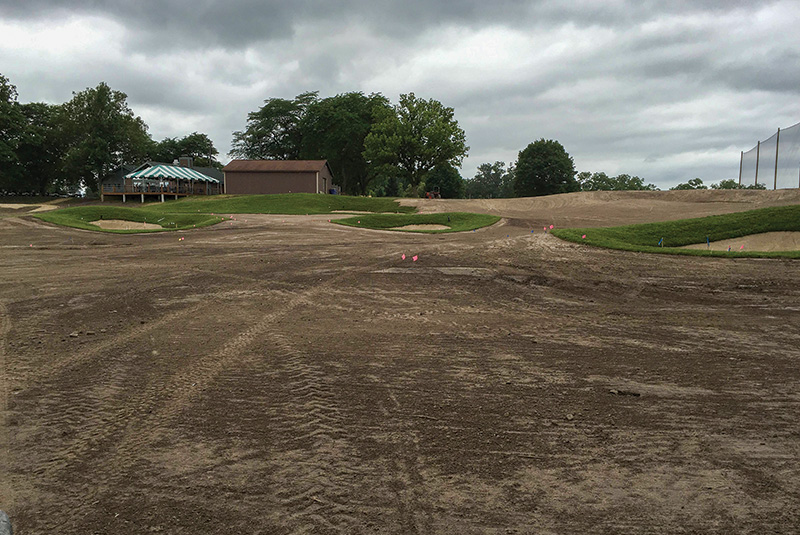
A renovation project at Indian Trails Golf Course allowed Kooienga the opportunity to ensure all his staff was involved, ultimately strengthening the entire operation.
As I reflect on managing a golf course while undergoing cancer treatment, I also recognize the role endurance training played in shaping my mindset. Training for a marathon is daunting, much like undertaking a major golf course project. Neither can be accomplished without planning, patience and preparation. Setbacks — injury, weather or unforeseen complications — are inevitable. Success comes from responding thoughtfully, adjusting when necessary and continuing to do the right things each day rather than becoming discouraged.
The same principle applies to turf management and leadership. When we focus too far ahead, it is easy to lose momentum. When we plan carefully, take consistent action and commit to seeing things through, progress follows.
I am grateful that the challenges I faced ultimately strengthened my commitment to this profession.
My standards for course conditions remain high — higher, in fact, than before — but they are now supported by better planning, stronger delegation and a clearer long-term perspective.
Growth, both personal and professional, requires continual learning and adaptation.
As superintendents, we have opportunities to improve every day if we are willing to take them — one day at a time.
Craig Kooienga is the GCSAA Class A superintendent at Indian Trails Golf Course in Grand Rapids, Mich., and a 23-year association member.