Editor’s note: The following article was supplied by the Bethel Farms. All product claims, research cited and other information are directly from the company.
For golf course superintendents, turf performance is measured by more than appearance. A grass must withstand traffic, recover from damage, compete against weeds, respond predictably to cultural practices and continue performing through the environmental stresses that come with a long golf season.
Those demands are exactly what have shaped the Bimini story and why Bimini has earned a reputation as America’s most resilient grass.
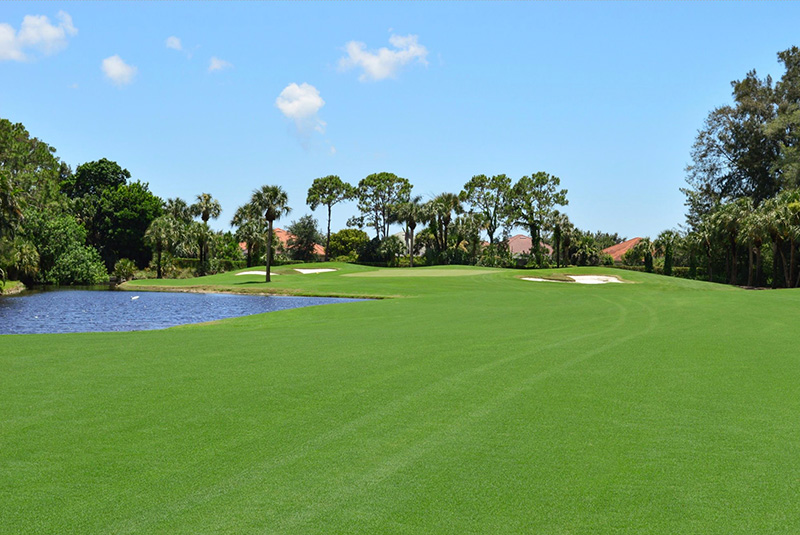
Bimini’s genesis dates to 2009-2010, when it was identified as a promising selection in Southwest Florida. A golf course superintendent recognized several characteristics that stood out under real-world golf course conditions, including aggressive growth, strong density and an ability to recover quickly from both cultural and environmental damage.
Those early observations ultimately helped define what Bimini would become: a bermudagrass selected not simply for appearance, but for the everyday performance characteristics that matter to turf managers.
Selected with recovery in mind
One of Bimini’s most notable traits is its aggressive growth habit. On a golf course, that translates into an ability to repair damaged or thinned areas quickly and maintain a dense playing surface under pressure.
Density is particularly important because it serves two purposes. A tight turf canopy creates the consistent surface golfers expect while also helping reduce opportunities for weed intrusion. At the same time, Bimini’s strong recovery characteristics allow it to rebound following mechanical stress, intensive cultural practices and challenging environmental conditions.
Another characteristic identified early in the selection process was Bimini’s responsiveness to fertility. Depending on the management objective, superintendents can use fertility inputs to accelerate growth and recovery or reduce inputs to slow the surface down. That responsiveness provides turf managers with another tool for adapting the grass to different areas of the golf course, seasonal conditions and maintenance programs.
High salt tolerance and genetic stability were also among the attributes that distinguished the selection. Those characteristics were evaluated and verified on a production farm through 2012, when the first commercial crop of Bimini was produced.
Traffic performance put to the test
While field experience provided the foundation for Bimini’s development, university research has provided additional insight into its ability to perform under traffic.
A 2020-2021 traffic simulation study conducted at Oklahoma State University’s Stillwater campus evaluated Bimini alongside approximately 90 competing bermudagrass cultivars.
Over the two-year study, Bimini ranked No. 1 for traffic tolerance among the cultivars evaluated.
For golf course superintendents, the significance of traffic tolerance is difficult to overstate. Cart traffic, maintenance equipment, concentrated foot traffic and everyday play continually place stress on turf. Grasses that can withstand that pressure while maintaining density can provide significant advantages in heavily used areas.
Bimini’s performance under traffic is supported by its robust rhizome production. Those underground stems provide the plant with an extensive structure for recovery and regeneration. Combined with Bimini’s energy-efficiency characteristics, that rhizome development helps the turf absorb significant traffic pressure while remaining dense and healthy.
The Oklahoma State test also highlighted another useful characteristic. During the same two-year study, Bimini ranked among the top three cultivars for winter color retention.
That combination of traffic tolerance and winter color can be particularly valuable in transition areas where bermudagrass may encounter cooler temperatures and shorter growing seasons.
Performance beyond Florida
Bimini was first recognized and developed in Florida, and the state remains an important proving ground for the grass.
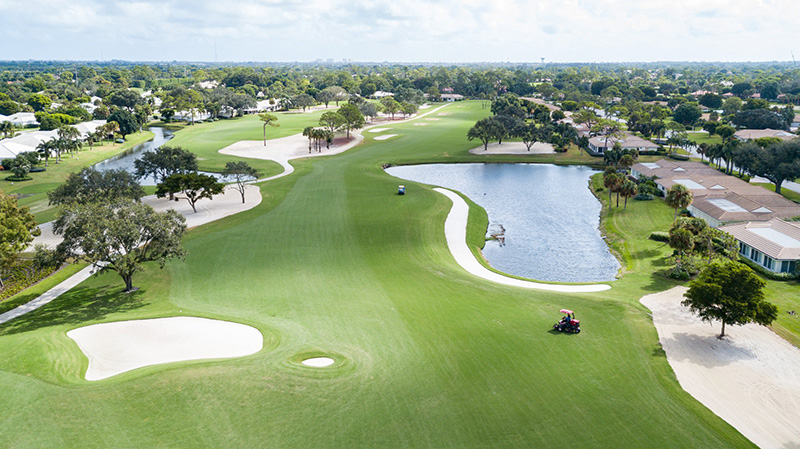
It has now been installed at dozens of high-end private clubs as well as municipal golf courses throughout Florida, demonstrating its ability to perform across a wide range of maintenance levels, expectations and playing conditions.
Its use has also expanded well beyond individual golf properties.
More than 45 million square feet of Bimini has been used annually on Florida golf courses and sports fields during each of the past four years, reflecting increasing adoption by turf managers looking for a dense, durable bermudagrass.
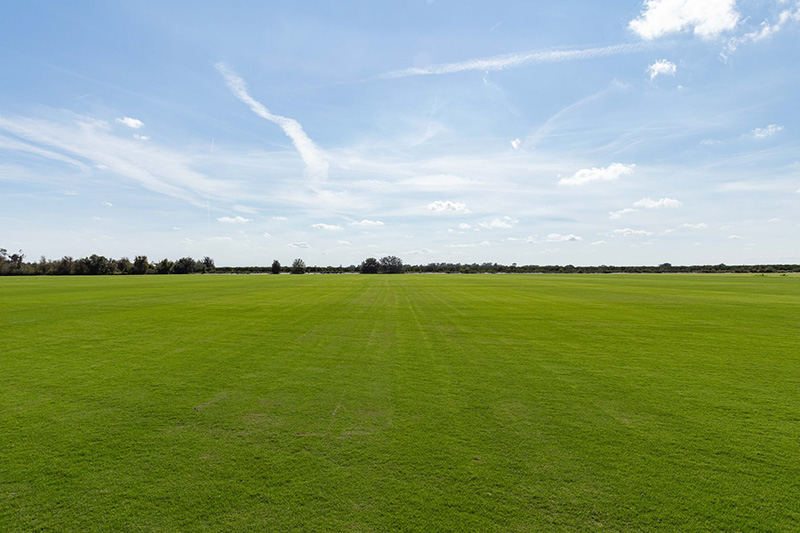
Production has expanded geographically as well, with Bimini now grown and sold across the country, from Florida to California. That expansion is helping demonstrate that Bimini’s performance characteristics are not limited to the warmest portions of the Southeast.
In the Carolinas, for example, Bimini has shown the ability to handle cooler temperatures and seasonal transitions on par with other commercially available bermudagrass cultivars. For superintendents managing bermudagrass near the northern edge of its traditional growing range, winter performance and spring transition can be as important as summer quality.
A turfgrass developed around practical performance
The golf course environment is ultimately where turfgrass genetics meet day-to-day management.
Superintendents need grasses capable of tolerating the realities of the property: divots, carts, equipment, cultivation, heat, fertility programs, water quality, environmental stress and thousands of rounds of golf.
Bimini’s development started with many of those realities in mind.
From a selection recognized by a Southwest Florida superintendent more than 15 years ago to university traffic testing and widespread commercial production today, its story has remained centered on the same fundamental attributes: density, recovery, traffic tolerance, responsiveness and adaptability.
For golf course managers, consistent playing conditions depend on turf that can handle demanding environments. Bimini has proven its ability to withstand pressure, recover quickly and adapt to changing conditions. It’s that resilience that has come to define Bimini as America’s most resilient grass.