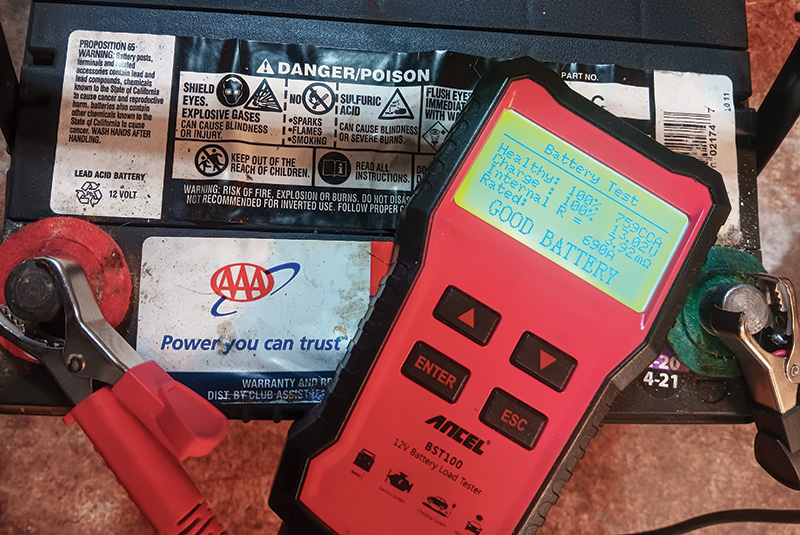
This battery was good but was replaced. The real problem was a failing alternator. The tester also checks the charging and cranking performance. tPhotos by Scott Nesbit
There’s a plague of defective new electrical parts. Counterfeits are everywhere. Investing less than $100 for test equipment can save your life energy by detecting inadequate service parts acquired online or at a store. You cannot trust parts that come in OEM boxes from dealerships or that carry familiar name-brand labels.
The only rational defense is to remember Ronald Reagan’s immortal line: “Trust, but verify.”
Wasted time
A Ditch Witch excavator’s engine refused to turn over after a few months of sitting idle. We fixed mouse-chewed wires, replaced the battery, used expletives. Problem was a dead four-post solenoid. The parts store had a replacement. Problem not solved. Pulled the starter motor, had it tested. No problems detected.
Finally tested the new solenoid — no continuity between the two small “trigger” terminals. Same problem with a second solenoid from the same store. A third solenoid from a different parts store worked. The engine started.
Solution: Bring a multimeter and some alligator test leads when buying electrical parts. Test before leaving the store.
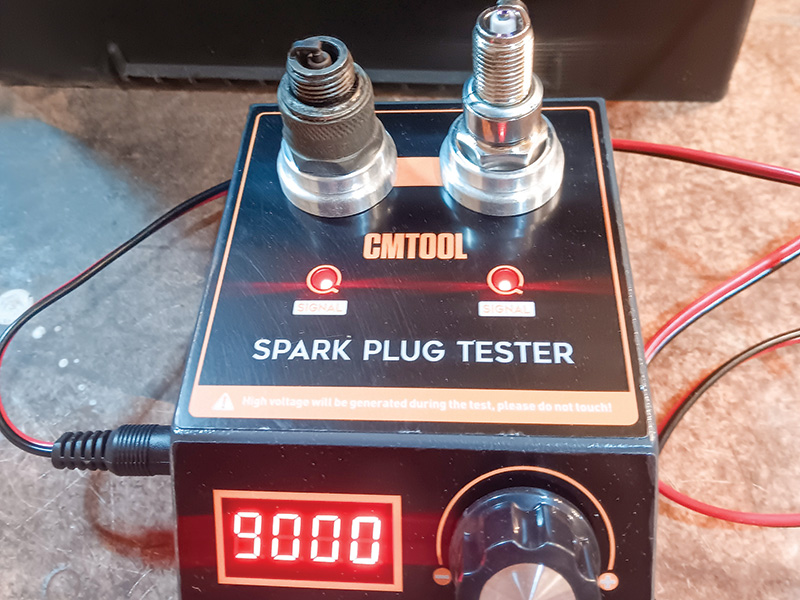
A spark plug tester does not find plugs that fail under cylinder compression but can help identify weak items. A short spring or metal extension was needed on short plugs to reach the contact inside the tester. This one uses 12 volts from vehicle battery, so it’s usable in the field.
Darned spark plug
A Husqvarna 128 series string trimmer wouldn’t get up to speed. Installed a new carburetor and the new spark plug (labeled NGK) that came in the kit. No cure. Installed a good used Champion plug, and the engine ran great. For grins, installed the old carb … trimmer still ran great.
I don’t blame NGK. The plug could have been a counterfeit. I blame myself for not replacing my spark plug tester that broke years ago. My new one runs up to 9,000 rpm, the speed range of chain saw and trimmer engines.
Finding the weak link
A machine’s electric clutch stopped grabbing after about five seconds. A new $125 clutch had the same problem. The real problem: the PTO switch, replaced for $15. Opening the old switch revealed corroded internal contacts that likely heated and failed when current passed through.
While it’s tough to find good parts, information is easy to find. Use artificial intelligence search engines (Microsoft Copilot, Google Gemini, Grok, iAsk AI and others). You’ll find the ohm ratings for solenoids and electric clutches, starter motor draw, minimum voltage for control computers and more.
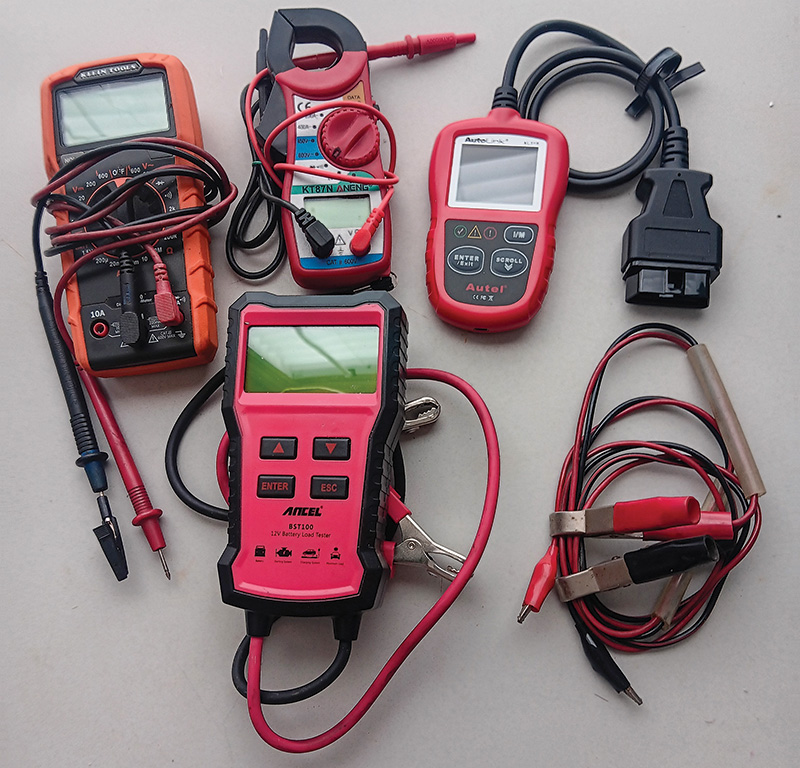
Test equipment required to detect defective electrical parts. Clockwise from top left: a multimeter; an amp clamp with simple continuity and voltage readings; automotive onboard-diagnostics tester; test leads with clips; and battery tester.
Blaming batteries
Batteries are often replaced when an engine won’t crank. A decent tester can check the alternator and starting system as well as the battery. Why not use it every time you change the oil? It takes only minutes. Most solid-state controls won’t work right if they don’t get enough voltage and/or amperage.
OBD testers
No vehicle sold in the U.S. after 1996 should be serviced unless you first connect a tester and read the computer codes with an onboard diagnostic tester. Many decent low-cost units connect to a smartphone. This tester can give an early warning that an engine is starting to fail but isn’t yet bad enough to trigger the check engine light.
Scott R. Nesbitt is a freelance writer and former GCSAA staff member. He lives in Cleveland, Ga.