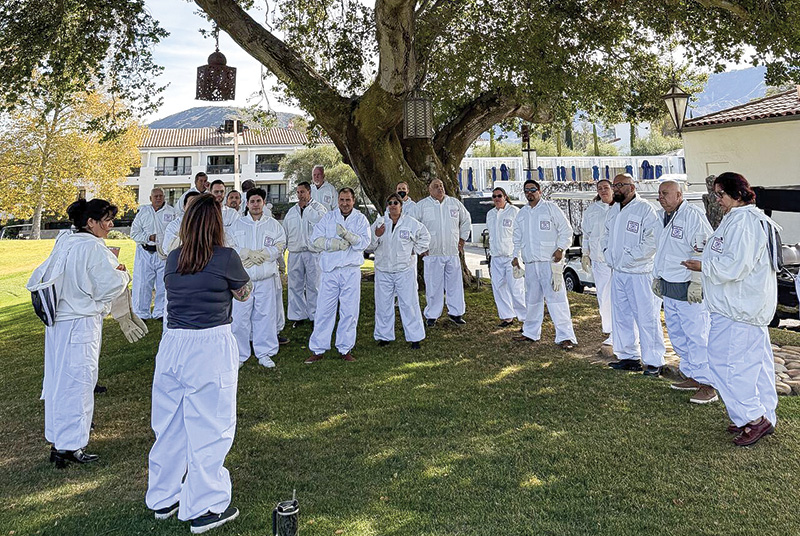
Tours of the apiary at Ojai Valley Inn and Spa in Ojai, Calif., have proven to be popular — and sweet. Photos courtesy of Casey Kim
It’s not uncommon for golf courses to sport beehives at their facilities.
Golf course beehives serve many purposes, including demonstrating a facility’s commitment to the environment as well as providing an immediate on-site pollinator. That the hives might produce enough honey to be used in the restaurant or sold in the clubhouse is merely an added bonus.
The course at Ojai Valley Inn and Spa in Ojai, Calif., takes the basic beehive to the next level.
The apiary isn’t tucked away in a secluded spot on the property. Instead, located near a pollinator garden, the bee yard at Ojai Valley is a destination unto itself.
Visitors to the property just over an hour northwest of Los Angeles are encouraged to tour the six-hive apiary, under the watchful eye of the resident beekeeper.
“We do a lot of things, like offering nature walks that are free to hotel guests, showcasing some things we have on the property,” says Casey Kim, CGCS, Ojai Valley’s director of agronomy the past four years and a 29-year GCSAA member. “One thing we do is, guests can go through an hour- or two-hour tour of the apiary. You can sign up and put on the protective white suits, the head mask and all that, and go through the apiary. There’s all sorts of education on bees and how they pollinate things, and then they do a honey tasting on the honey they collect from those hives. It’s pretty cool.”
In addition to the sweet treat of cold-pressed raw honey, the tours highlight the course’s pollinator-safe turf program and the resort’s commitment to native bee health. Additionally, the property has drought-tolerant pollinator gardens throughout the grounds that are integrated with herb and edible gardens to create “a continuous, chemical-light corridor from the fairways to the dining table.”
“It’s all just affirmation that we’re very conscious of the applications we put out,” Kim says. “It’s affirmation the property is very conscious of sustainable practices, from irrigation usage to the prudent use of chemicals.”
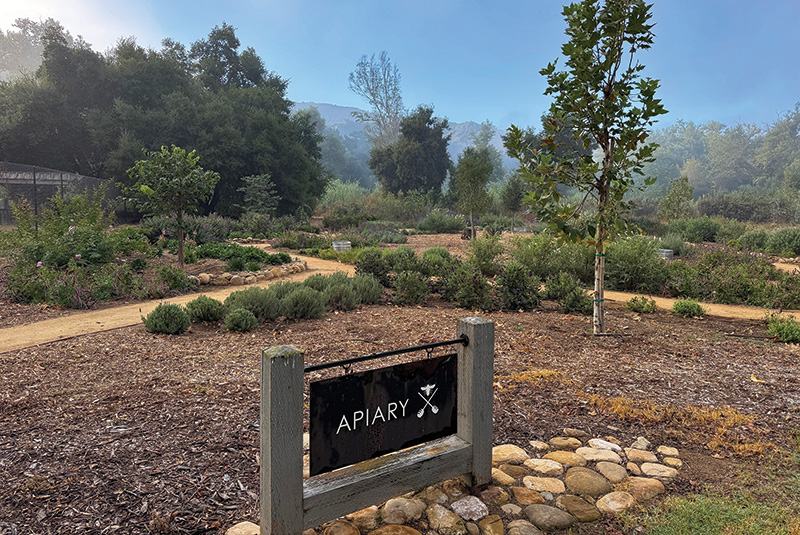
The apiary is located adjacent to the property’s pollinator garden.
Originally the Ojai Country Club, built in 1923 by George C. Thomas Jr. and Billy Bell (the two also worked together on The Riviera Country Club), the course is now a bit of an oasis just a short distance from one of the country’s biggest metropolitan areas.
“It’s a unique property in the sense that it is so secluded,” Kim says. “It’s a retreat for people who want to get away, and golf is just a part of that. I’m thrilled to be here. It’s a beautiful property, and the ownership is great. A lot of families come here, just to get away from L.A. It’s very secluded, a wonderful natural environment.”
The resort also features the Ojai Raptor Center, one of the largest raptor rehabilitation aviaries in California, and the course sports nest boxes for bar and western screech owls.
“We’re very conscious of the environmental things we do,” Kim says. “From the spa perspective, the food and beverage side of things, the agronomy, the rescue birds … we do a lot.”
Kim says while much of the recognition for the resort’s environmental bona fides focused more on the resort and less on the golf — the resort holds Audubon International Green Hospitality Platinum Certification, the Inn was the first hotel in the world to garner Forbes International Hospitality VERIFIED certification and earned the Oceanic Global 2 Star Seal for eliminating single-use plastics — the course added an honor of its own when it was named an Audubon Cooperative Sanctuary Program earlier this year.
“That was my idea,” Kim says. “That’s been the focus at every property I’ve been at. It’s one of the things I’ve been taught, trained at. It’s all just recordkeeping, putting it on paper, demonstrating what we’re doing. It’s actually a simple process. These are mostly things you do anyway. Generally, you try to save water, utilize labor the best way you can, use chemicals prudently.
“Honestly, I don’t know why every property isn’t involved with it. The cost is so minimal, and I think for every property to go through the process of auditing all those separate segments is vital. It’s an important aspect of the education about golf, especially now that there’s such a negative connotation around irrigated turf and golf. It’s validating, just another piece of evidence that golf or your operation is a valuable part of your community.”
Andrew Hartsock is GCM’s editor-in-chief.