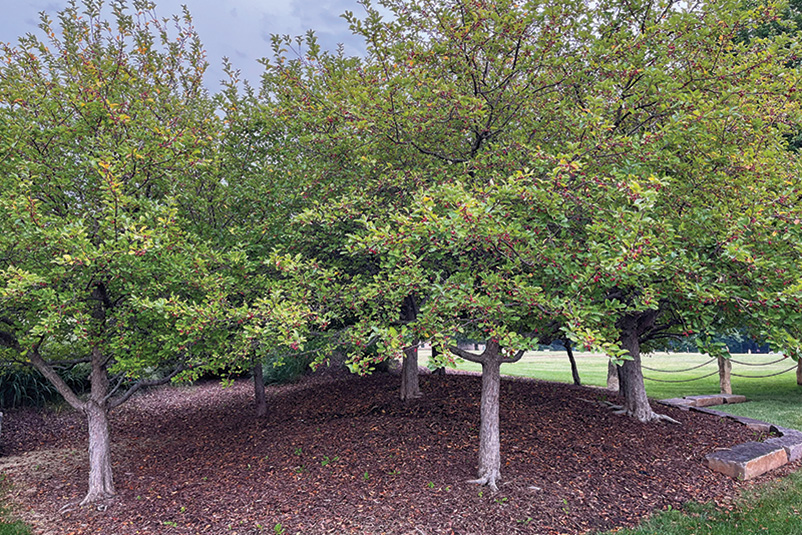
Mulch, as in here under crab apple plantings, can be beneficial, but it's important not to overdo it. Photos courtesy of John Fech
Prevention has been long recognized as a key lifestyle choice. It’s such an important endeavor that an entire magazine is centered around it. The old adage attributed to Ben Franklin — an ounce of prevention is worth a pound of cure — is true for many things in life, certainly for tree management on the golf course. Just like changing the oil in your truck as per the manufacturer’s guidance or getting your teeth cleaned every six months, providing trees with what they need and routinely inspecting them for problems goes a long way toward keeping them in the asset category rather than the “problem child” pile. After all, which is better: to look closely and provide good care on a regular basis or to cut down lots of specimens that used to provide an abundance of benefits?
There are many facets of tree-problem prevention for golf courses. The more of them that you put into practice, the more benefits will be reaped in terms of healthy trees and lowered maintenance costs. Some of the ones outlined below are probably already being put into practice on your golf course, but as you read through, consider implementing the ones that aren’t.
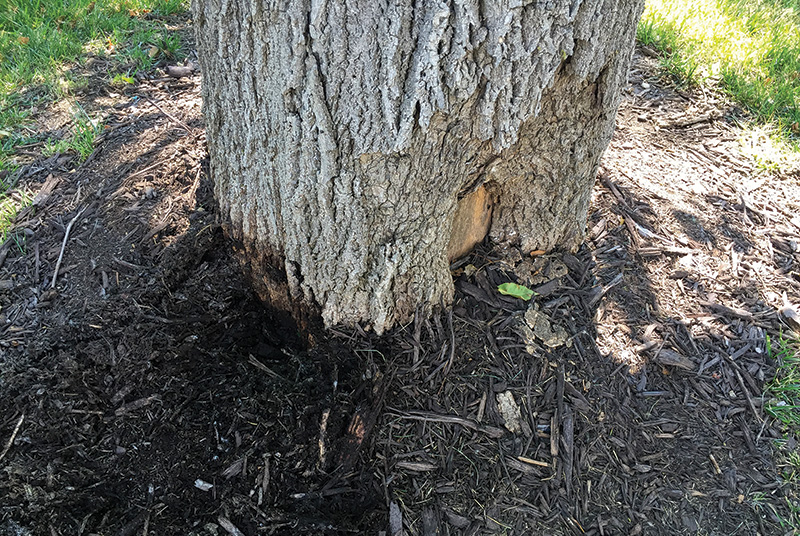
Mulches can be properly or improperly used in the golfscape. Too much of a good thing isn’t so good. Placement of more than 3 inches against the trunk tends to keep bark tissue excessively moist, which often leads to decay and degradation of the sapwood.
Mulch
Arborists and horticulturists alike extoll the virtues of natural mulch for trees, shrubs and flowering plants. There are six main benefits of placing 2-3 inches of wood chips, pine straw or bark chunks over the top of the roots.
- Mimics forest conditions. Trees that grow in forests accumulate a natural layer of fallen debris containing shed twigs, seeds, flowers and leaves. This layer acts as a natural weed preventer and moisture retainer, which benefits the tree.
- Introduces organic matter. As the fallen tree debris from the canopy interacts with soil microorganisms, it breaks down and transitions into organic matter, which returns nutrients and enhances the development of new roots.
- Lessens temperature fluctuations. Especially in soils dominated by sand or clay, mulch over the top of the roots acts as a buffering agent, keeping temperatures and moisture levels more stable than without.
- Slows runoff. Like turf roots and shoots, mulch serves to facilitate the slowing down and soaking of precipitation in stormwater events. This is especially pertinent to tree roots near parking lots, cart paths, concession stands and clubhouses.
- Lowers weed competition. Dense turfgrass acts as an effective weed suppressor, shading germinating seedlings and reducing their capacity to extract adequate nutrients and moisture. Mulch serves a similar purpose.
- Keeps mowers and string trimmers away. Properly placed mulch around trees and shrubs eliminates the need to operate turf maintenance equipment near bark and the basal plate. Keeping trunk injury to a minimum is a great decay preventer.
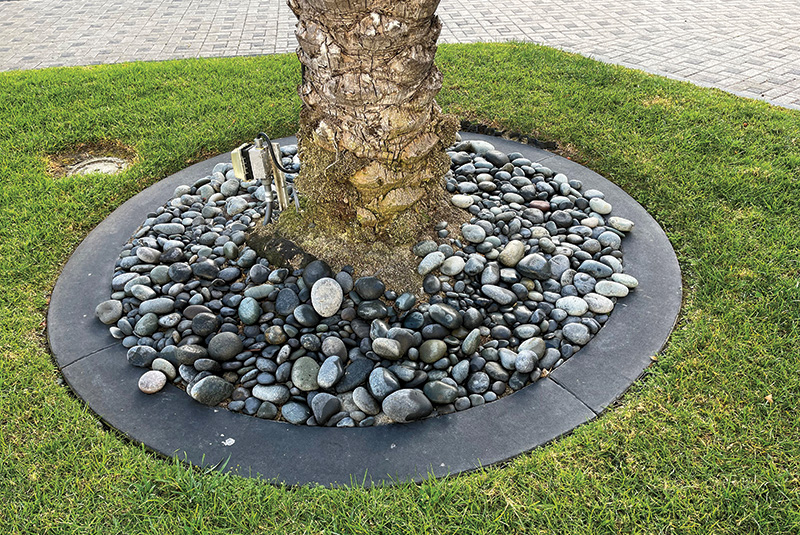
Non-wood by-product mulch is not recommended for several reasons.
However, too much of a good thing isn’t so good. Placement of more than 3 inches against the trunk tends to keep bark tissue excessively moist, which often leads to decay and degradation of the sapwood. Generally, medium-to-large-sized mulch particles, applied and maintained in a 2-to-3-inch layer, provide great preventative and vitality benefits.
Non-wood by-product mulch such as plastic sheeting, rock, rubber and pea gravel is not recommended. They add excessive heat, exclude soil oxygen, fail to enhance soil organic matter and often encourage overly wet soils leading to root rot.
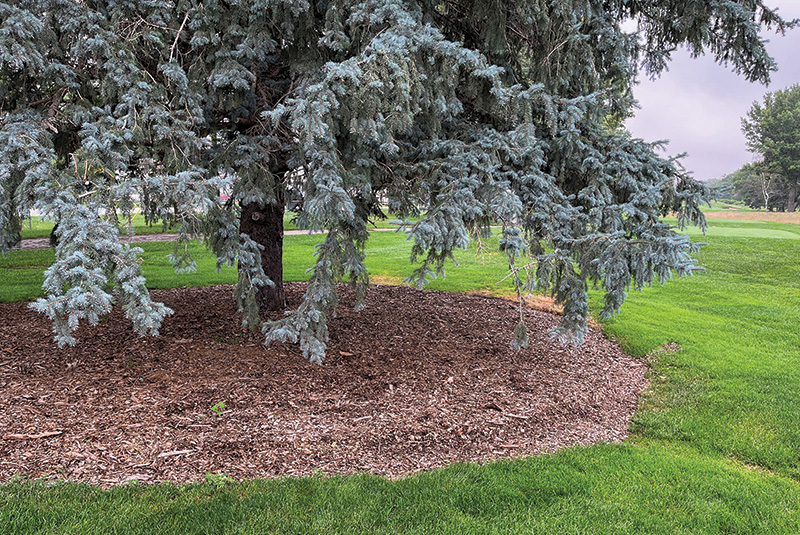
Proper mulch placement, type and depth are great problem-prevention techniques.
Separate turf and trees
For many reasons, it’s best to place trees on a course such that they provide benefits in specific locations, not in the midst of turf. Ideally, masses or islands of trees and shrubs would be located where they provide the benefits of screening, dogleg identification, needed shade for the clubhouse and concession stands, backdrop awareness for approach shots, physical barriers between fairways and sound reduction along trafficways.
When trees are separated from turf, competition between the two is reduced, allowing for optimal absorption of water, sunlight and nutrients for each. Trees that are provided with these inputs are healthier than ones that must vie for the essentials of life.
For trees that are competing with turf, many problems can be prevented by creating small, mulched areas around trunks. How big or small is ideal? The answer is a combination of playability or the capacity to strike a golf shot as close to the tree as possible and averting contact with mowers, string trimmers and other equipment with the conductive tissues under the trunk bark. When the base of the tree is injured, decay often is initiated. Another frequent recipient of damage are the stabilizing roots as they extend outward into the fairway or tee. Preferably, considering the lateral spread of most tree root systems, the mulched area would extend to the drip line of the tree branches or wider depending on practicality of the location. This essential space is called the protected root zone.
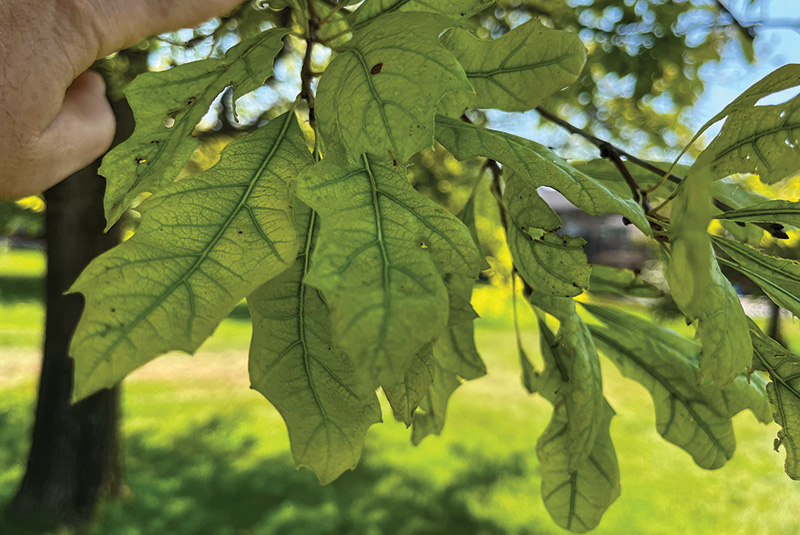
Watering, soil testing and fertilizing are basic but important cultural practices.
Water and fertilize accordingto need
Generally, trees tend to need less water and fertilizer than turf. If specimen choices have been made according to local recommendations from Extension horticulturists and foresters or ISA-certified consulting arborists, trees and shrubs will get all the water they need, especially on an irrigated golf course. Trees that have been poorly chosen will develop nutrient deficiency and dehydration symptoms in response to soil characteristics.
When these symptoms appear, it’s important to investigate whether a deficit or overabundance exists. Soil and tissue testing laboratories can provide vital information related to adjustments in fertility inputs. Likewise, using simple tools such as shovels, screwdrivers and soil probes, it’s relatively easy to determine whether soils are appropriately moist or are consistently soggy or dry. Of course, each tree differs in terms of specific need, with some adapted quite well to droughty and nutrient-poor or -rich and boggy conditions, but the general tenet between turf and trees is that less water and fertilizer tend to produce healthier, disease-resistant plants.
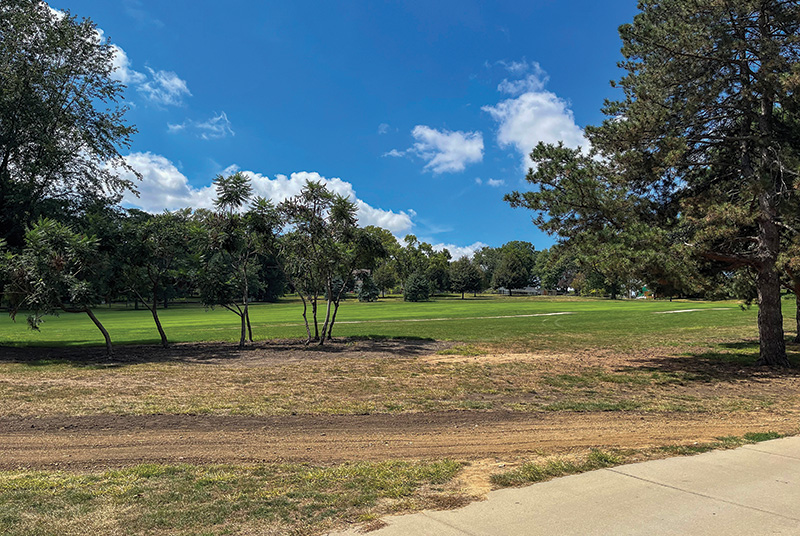
Preventing compaction is much easier than fixing it.
Scouting and monitoring
Along with regularly checking for soil moisture and fertility levels, frequent inspection for diseases and insects is crucial. In some situations, if a pest population is noticed early enough in its development, a reasonable degree of control can be achieved. In other cases, it’s more a matter of lessening the degree of objectional symptoms rather than actual control, however, in high priority locations, just about any degree of visible reduction in a malady is often justifiable.
Two approaches to scouting are routinely utilized. The first involves designating and training several crew members and scheduling scouting inspections every day, focusing on high priority and historically pest-prone trees. The other is to ask all staff to be observant and document odd appearances or symptoms of woody plants that they pass by on their way to perform other duties. Both systems can be effective. It’s up to the superintendent to choose which is best for a given course.
Because most pests are better prevented than cured and tend to recur in the same location until the disease or insect life cycle is broken, recording outbreaks and infestations in a database will provide an excellent tool for management in the following year. Essential data such as the date of first notice, location on the course, species of tree, extent of the damage, whether symptoms are present on surrounding trees of the same species, treatment(s) implemented and an evaluation of the success of any control measures taken should be gathered.
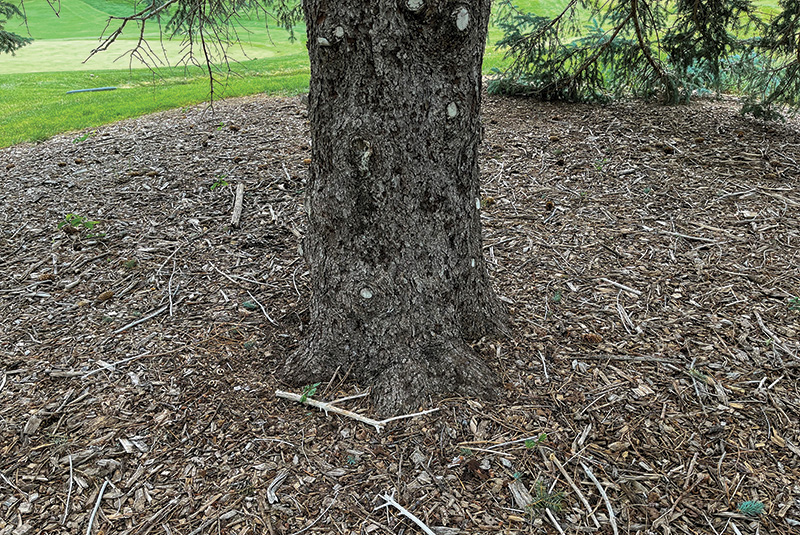
Healthy basal flare development is a direct consequence of proper tree planting.
Prevent compaction over root systems
Avoiding compaction is important for tree root systems because it’s the most difficult limiting factor to remediate. Above ground issues such as cracks, crossing limbs, sucking insects, foliar pathogens and small co-dominant leaders can usually be dealt with by using basic to moderately involved corrective measures, whereas re-creating healthy soils is an extremely challenging endeavor.
As any turf maintenance operation is contemplated for implementation, it’s crucial to consider whether compaction of soils near trees will occur during the process. Perhaps the most visual way to describe this prevention technique is to think about where roots grow. Simply said, they don’t grow in the soil, they grow in the air spaces between soil particles. If they are smashed together as a result of driving heavy equipment over them, inadequate soil oxygen is available for healthy root growth and without roots, the rest of the tree goes downhill quickly.
While compaction relief techniques are possible, such as radial trenching, scoop and dump, root collar excavation and vertical mulching, they are invasive and usually expensive to implement. Preventing compaction is always better than trying to fix it.
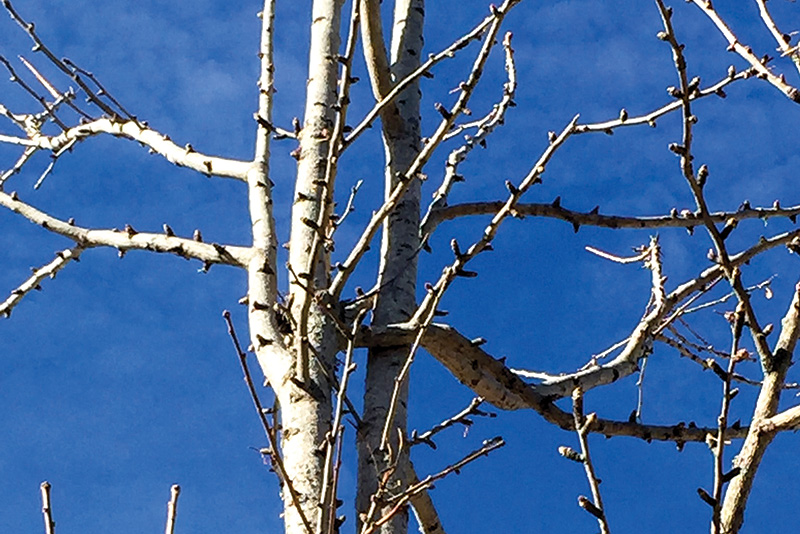
Eliminating co-dominant leaders and expanding mulch outward from the trunk are good examples of preventative steps.
Year-one practices
Starting out from day one is perhaps the ultimate prevention step. While trees are small, the opportunity to set them up for success and the potential to correct slight sapling health problems is greatest.
The first consideration is following appropriate planting techniques. There are many:
- Spread out roots horizontally to eliminate stem-girdling roots
- Dig a wide and shallow planting hole three times as wide as the root mass and no deeper
- Place the top lateral root at or slightly above the soil grade
- Remove any wire baskets or burlap around the roots
- Use your hands to slightly press backfill soil in place to firm it, not compress it
- Use the same soil to fill in around roots that were taken out of a hole, not amending it with potting soil, peat moss, compost or other similar materials
- Stake the tree loosely in windswept areas, allowing the trunk to sway slightly in the breeze
- Water the tree slowly and gradually with 15-20 gallons of water to settle the soil and eliminate air pockets
After planting, eliminate any crossing/rubbing branches and co-dominant leaders. Endeavor to keep the soil moist, not soggy or dry and apply 2-3 inches of organic mulch over the root mass but not against the trunk. As the roots grow outward, expand the mulch layer away from the trunk. Avoid fertilization for the first year to encourage root growth over shoot production.
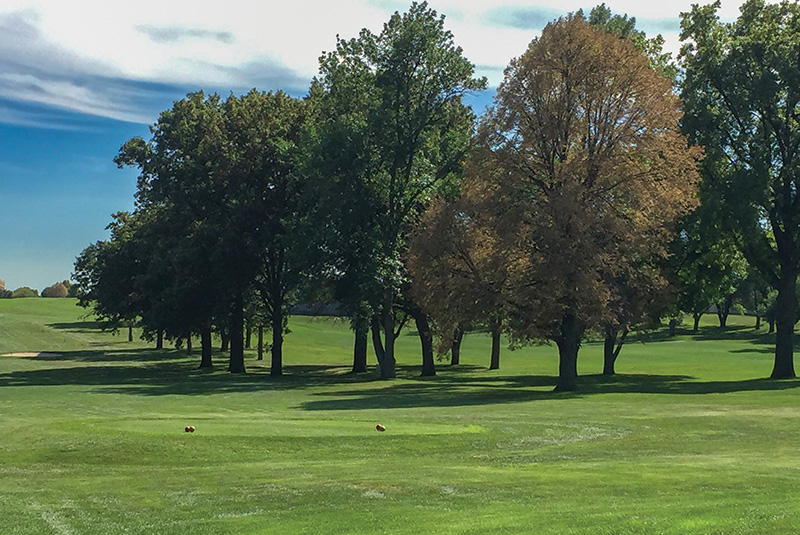
Sometimes, the best problem prevention technique is tree removal.
Get rid of
To prevent the spread of serious insects and diseases from one specimen to another, removal is a good option to consider. Removing poor condition, problem-ridden and misplaced trees can be tricky. As many golf industry professionals have observed and experienced, trees on a golf course tend to evoke an emotional response in the minds of stakeholders. In fact, just the idea of removing trees can make a green committee or spouse philanthropic league member’s head spin. Fortunately, there are many good resources to assist with this technique including leaning on the original course masterplan, chapter best management practices, documentation of flaws and defects and appealing to the natural motivational patterns of decision makers including logic, emotion and credibility. Arboricultural experts can be of tremendous benefit when gentle but effective persuasion is needed.
John C. Fech is a horticulturist and Extension educator with the University of Nebraska-Lincoln. He is a frequent and award-winning contributor to GCM.