
In the intricate fabric of daily interactions, negotiation skills subtly weave their way through your everyday, often unnoticed. Though commonly associated with high-stakes business deals or diplomatic negotiations, the principles of negotiation are inherently present in most of our decisions and discussions that shape everyday life. Many individuals unknowingly employ negotiation skills in their personal, social and professional life. Whether it’s deciding on household chores, agreeing on social plans or managing workplace responsibilities, each negotiation fosters important skills, such as effective communication, empathy and strategic thinking.
The many faces of negotiation
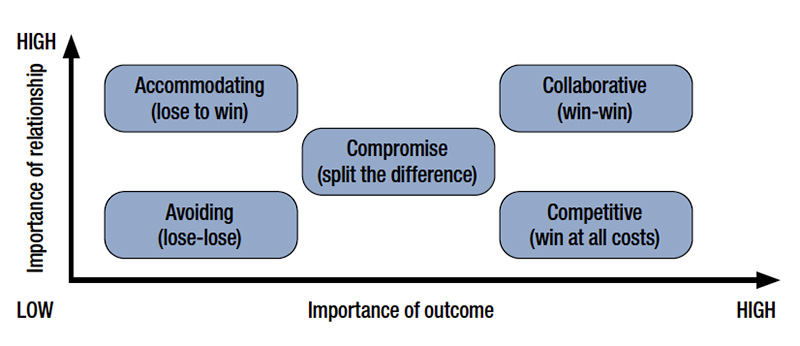
We all accept that everyone has different communication styles. Individuals bring their own set of experiences, skills and tools that affect the way they interact with others, both at home and in the workplace. Individual communication styles also translate into how they negotiate. From these natural patterns of communication, five negotiation styles appear:
- Competing.
- Collaborating.
- Compromising.
- Accommodating.
- Avoiding.
Each of the five styles usually uses a different combination of assertiveness and cooperativeness.
Competitive (I win at all costs): Competitive negotiators tend to do whatever it takes to reach their desired agreement, even when it comes at the expense of another person or entity. They are focused on achieving short-term goals quickly.
Collaborative (I win, you win): This style values strengthening, setting up and building relationships. Individuals are willing to invest time in finding solutions and building valued partnerships. A collaborative negotiation style is effective in most negotiations.
Compromising (Split the difference): This style sometimes can be confused with collaborative. Unlike the “win-win” style, where each party concedes part to gain another part, the compromise negotiation focuses on splitting all parts of the negotiation equally.
Avoiding (I lose, you lose): People who identify with this style dislike conflict and tend to talk in vague terms. If an agreement is reached and they dislike the outcome, they undermine the result before the other party even knows they were unhappy.
Accommodating (I lose, you win): Accommodating is the direct opposite of competitive. Accommodators try to win people over by giving in to their requests and tend to share more information than they should.
Mind the trap
Investing time and effort prior to any negotiation situation yields significant benefits. It enhances understanding of both parties’ needs, strengthens one’s position, builds confidence and allows for strategic planning. These are some pitfalls which must be avoided:
Unclear communication: Misunderstandings or ambiguous statements can derail the process. Clear and assertive speaking is crucial for articulating one’s own needs and interests without being aggressive or confrontational.
Being afraid to offend: You may fear rejecting other people’s proposals or find it embarrassing or stressful. Unlike an argument, negotiation is a conversation aimed at reaching an agreement. It’s just part of the process.
Not listening: If you talk over or ignore what is being said, it will make it harder to agree.
A rigid approach: Being too rigid in one’s demands or unwilling to consider alternatives can lead to deadlock and missed opportunities.
Caring too much: You need to care about the outcome, but not so much that you make an unwise decision because you feel unable to walk away. Keep your emotions in check and decide when to call it a day.
Not knowing your “BATNA”: Best Alternative to a Negotiated Agreement (BATNA) relies on knowing the “zone” of negotiation. Even though your aim in negotiation is to get what you want, you need to decide when it’s best to cut your losses and walk away. Having a clear BATNA means you can push harder and get a better deal than you expected.
Intentional calm
One of the key challenges in negotiation is managing our emotions. Emotions, when left unchecked, can cloud judgment, escalate conflicts and hinder the achievement of mutually beneficial agreements.
Emotional outbursts or erratic behavior can undermine and create an atmosphere of suspicion and hostility, while a composed and rational demeanor shows professionalism and reliability. Effective negotiation requires a blend of strategy, communication and psychological insight. The top 10 secrets for successful negotiating:
- Don’t be afraid to ask for what you want.
- Listen.
- Do your homework.
- Be willing to walk away.
- Don’t be in a hurry.
- Aim high.
- Focus on the other side’s pressure, not yours.
- Show the other person how their needs will be met.
- Don’t give anything away without getting something in return.
- Don’t take the issues or the other person’s behavior personally.
Step into the conversation like a pro. Trust your instincts, finesse your approach and turn negotiations into effortless victories.
Phil Helmn, MG, has gained more than 35 years’ experience in sports turf management. He is a university lecturer and recognized as a leading industry management specialist. He is a regular speaker on leadership and management and the author of “The Power of People,” which offers tips for managing the modern-day team.