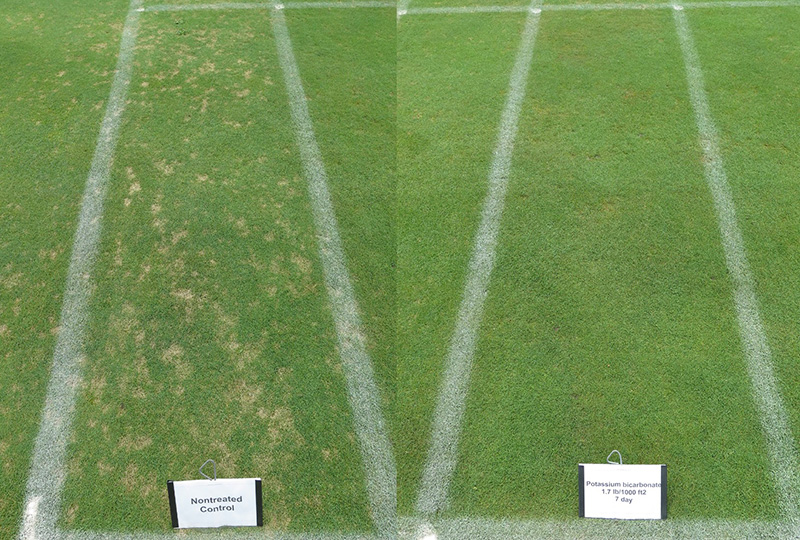
Figure 1. Alkaline products significantly reduced dollar spot compared to a non-treated control. Photos by Paul Koch
Author’s note: This article was modified from an article published in the journal Plant Disease. The full scientific article can be accessed there.
Effective dollar spot management demands an integrated strategy that integrates various cultural practices with the timely application of conventional pesticides. However, repeated pesticide applications are often required for acceptable dollar spot control in temperate climates where favorable conditions for dollar spot development persist throughout much of the growing season. Increasing governmental restrictions and fewer new chemistries coming to the market in recent years has resulted in fewer remaining fungicides available for use to manage dollar spot. Increasing reliance on these fewer remaining products has predictably increased rates of fungicide resistance in dollar spot populations. The cumulative result of all these factors has increased the urgency to identify alternative strategies for suppressing dollar spot.
In other plant systems, such as fruits and vegetables, manipulation of the leaf surface pH has been used to suppress diseases such as powdery mildew, Botrytis fruit rots and Sclerotinia infections on soybean (1, 2, 3, 8). Research demonstrating the impact of pH on dollar spot severity has provided mixed results. In the field, dollar spot severity was slightly suppressed on creeping bentgrass in response to both repeated foliar applications of the acidic nitrogen fertilizer ammonium sulfate (4) and the alkaline nitrogen fertilizer calcium nitrate compared to other nitrogen sources (7). Laboratory investigations of pH impacts on dollar spot fungal growth found that the fungus grew slower in an alkaline growth solution compared to an acidic one (6).
The primary objectives of this research were to 1.) identify whether repeated foliar applications of alkaline compounds can suppress dollar spot development in the field and 2.) to develop specific recommendations for turfgrass managers to optimize the use of alkaline compounds for dollar spot suppression.
This research compared the suppressive effect of four alkaline compounds applied at various rates, reapplications intervals and water carrier volumes.
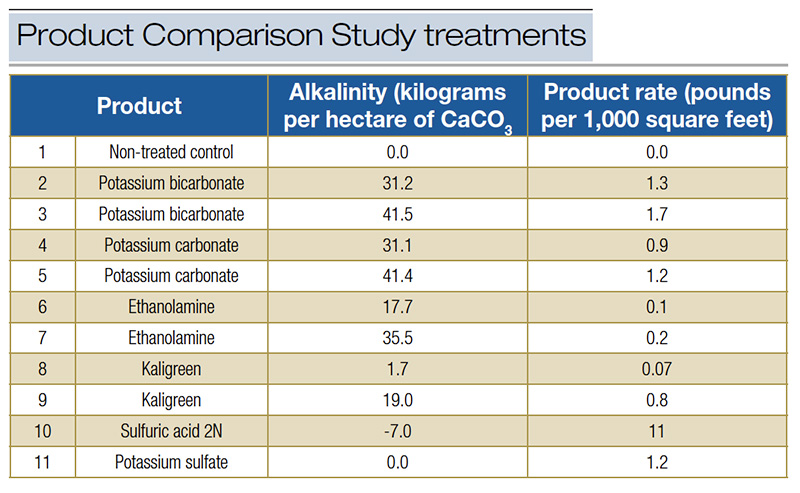
Table 1. Treatments used in the Product Comparison Study including their alkalinity and product rate. Alkalinity is calculated as the kilograms per hectare of CaCO3 of a single application. Kaligreen is a commercially available form of potassium bicarbonate.
Methods
Each of the above objectives was assessed separately at the O.J. Noer Turfgrass Research and Education Facility in Madison, Wis., in 2024 and 2025. Objective 1 (Table 1) was addressed with a study called the Product Comparison Study, and objective 2 (Table 2) was addressed with a study called the Application Optimization Study. Both studies were conducted on a mixed stand of Penncross creeping bentgrass (Agrostis stolonifera) and annual bluegrass (Poa annua) maintained under fairway conditions. Individual plots measured 3 feet by 10 feet (0.91 meter by 3.05 meters) and were arranged in a randomized complete block design with four replications. For the Product Comparison Study, all treatments were applied at a nozzle pressure of 40 psi using a CO2-pressurized sprayer equipped with one Teejet AI9508EVS nozzle. All fungicides were agitated by hand and applied in the equivalent of 1.5 gallons of water per 1,000 square feet (0.61 kiloliters per hectare). Treatments were initiated on May 25, 2023, and then again on May 27, 2024, and subsequent applications were made at seven-day intervals. For the Application Optimization Study, all treatment rates were the same at 1.7 pounds of potassium bicarbonate per 1,000 square feet (83 kilograms per hectare) and were agitated by hand and applied in either 0.5, 1.0 or 1.5 gallons of water per 1,000 square feet (0.20, 0.41 or 0.61 kiloliter per hectare). All treatments were initiated on May 25, 2023, and then again on May 27, 2024, and subsequent applications were made at either seven-, 14- or 21-day intervals. For both studies, the number of dollar spot foci per plot and turfgrass phytotoxicity were visually assessed every two weeks. Leaf pH was also assessed every two weeks using a flat-tipped handheld pH meter, and soil pH was measured at the beginning and end of each year of the study.
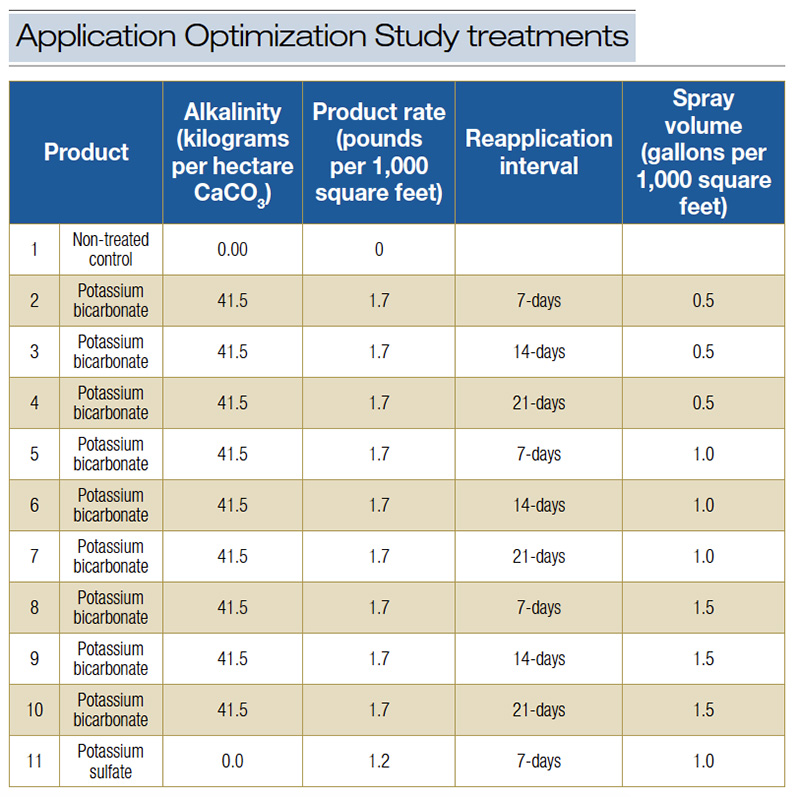
Table 2. Treatments used in the Application Optimization Study including their alkalinity, product rate, reapplication interval and spray volume.
Results
Product Comparison Study
Plots treated with the most alkaline products consistently had the lowest amounts of dollar spot (Figure 1). All treatments delivering more than 0.39 pound per 1,000 square feet (19 kilograms per hectare) of CaCO₃-equivalent alkalinity suppressed dollar spot by over 70% compared to the non-treated control, while treatments exceeding 0.72 pound per 1,000 square feet (35 kilograms per hectare) CaCO₃-equivalent alkalinity decreased dollar spot by more than 95% compared to the non-treated control (Figure 2). In contrast, acidic or pH-neutral treatments failed to suppress dollar spot. Kaligreen is a commercially available form of potassium bicarbonate, and when applied at its labeled rate delivers only 0.03 pounds per 1,000 square feet (1.7 kilograms per hectare) CaCO₃-equivalent alkalinity, which did not suppress dollar spot relative to the non-treated control. Sulfuric acid did not impact dollar spot severity in 2023 but did increase it compared to the non-treated control in 2024. Potassium sulfate, which provided 0.0 kilogram per hectare CaCO3-equivalent alkalinity and 0.31 pound per 1,000 square feet (15 kilograms per hectare) K₂O, similar to several alkaline treatments, had no impact on disease development compared to the non-treated control.
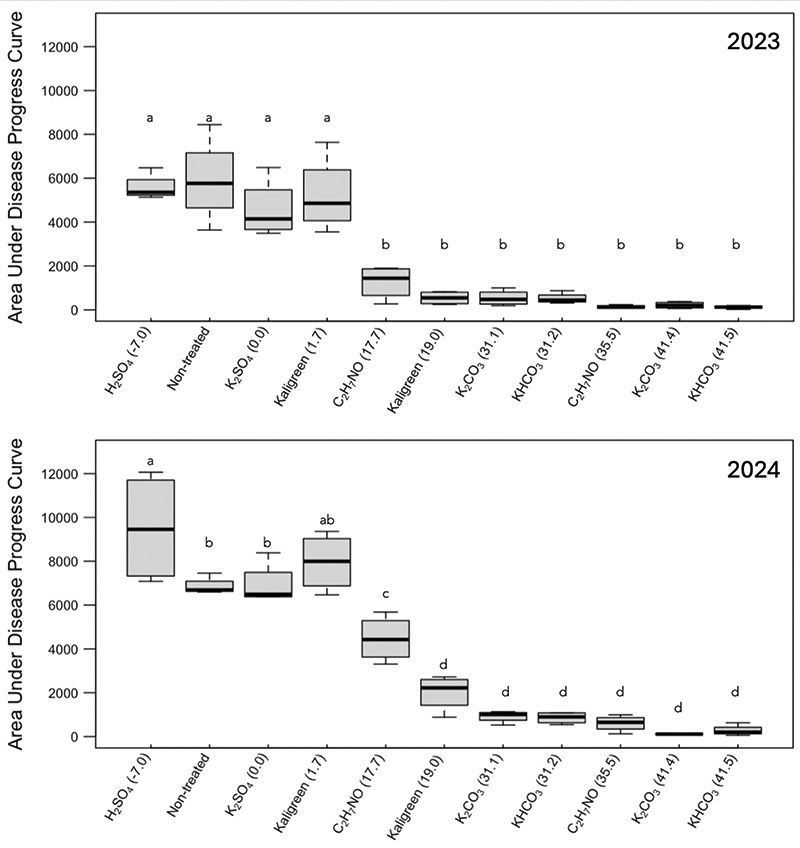
Figure 2. Dollar spot severity in 2023 (top) and 2024 (bottom) in the Product Comparison Study as measured by area under the disease progress curve (AUDPC). Treatments on the x-axis are shown in increasing order of alkalinity. Numbers in parentheses indicate the alkalinity calculated as kilograms per hectare of CaCO3-equivalent. KHCO3=potassium bicarbonate, K2CO3=potassium carbonate, C2H7NO=ethanolamine, H2SO4=sulfuric acid, and K2SO4=potassium sulfate. Treatments sharing the same letter above the bar are not significantly different based on Tukey’s HSD test (P < 0.05).
Treatment alkalinity had modest impacts on turf phytotoxicity in 2023 but greater effects in 2024 (Figure 3). Treatments delivering >19 kilograms per hectare CaCO₃-equivalent alkalinity exhibited significantly higher phytotoxicity compared to those with lower or no alkalinity. This separation was evident with both rates of potassium carbonate, the high rate of ethanolamine and both rates of potassium bicarbonate (Figure 4). Treatments with acidic or pH-neutral properties, such as sulfuric acid, potassium sulfate, the low rate of ethanolamine and the label rate of Kaligreen, produced minimal or no phytotoxic effects on turf. While it’s not entirely clear why phytotoxicity was less pronounced in 2023 compared to 2024, the environmental conditions in 2023 were cooler and drier with relative humidity, which may have resulted in less phytotoxicity. Overall, however, a threshold alkalinity level greater than 19 kilograms per hectare CaCO₃-equivalent may be predictive of visual turf injury.
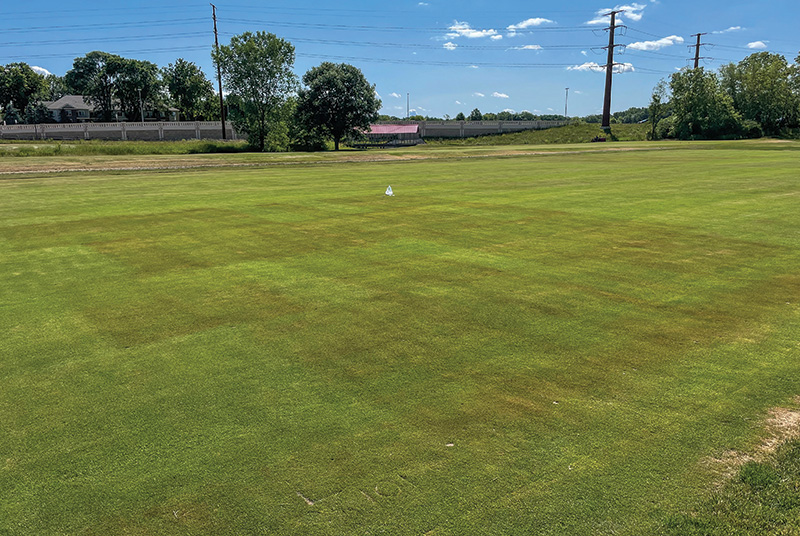
Figure 3. Alkaline products produced a brief but significant flash of phytotoxicity on the turf.
Application Optimization Study
Reapplication frequency had the greatest impact on dollar spot severity. Dollar spot severity in the plots treated weekly was reduced by 96% to 99%, while biweekly treatments achieved disease suppression ranging from 47% to 79%, and 21-day intervals offered reductions between 41% and 59% compared to the non-treated control (Figure 5). Spray volume largely did not influence the effectiveness of potassium bicarbonate. Alkaline conditions induced a phytotoxic response in turfgrass following applications in both years. In 2023 the phytotoxic response was modest but still significant in the seven- and 21-day reapplication intervals, while in 2024 the response was more pronounced on seven-day treated plots than the other treatments. There were no differences in phytotoxicity with treatments applied on 14-day intervals compared to the control, yet there was a slight increase in the 21-day applications. No impact of spray volume on phytotoxicity was observed. Reapplication frequency also had the clearest impact on phylloplane pH in 2024 (Figure 6). Plots treated on a seven-day interval maintained near stable alkaline conditions throughout the study between a pH of approximately 9.5 and 10.2. Reapplication intervals at 14 days and 21 days resulted in greater fluctuations in phylloplane pH, with pH falling to around 6 for about one week after the application and staying there until the next application was made. No impact of water volume on phylloplane pH was observed.
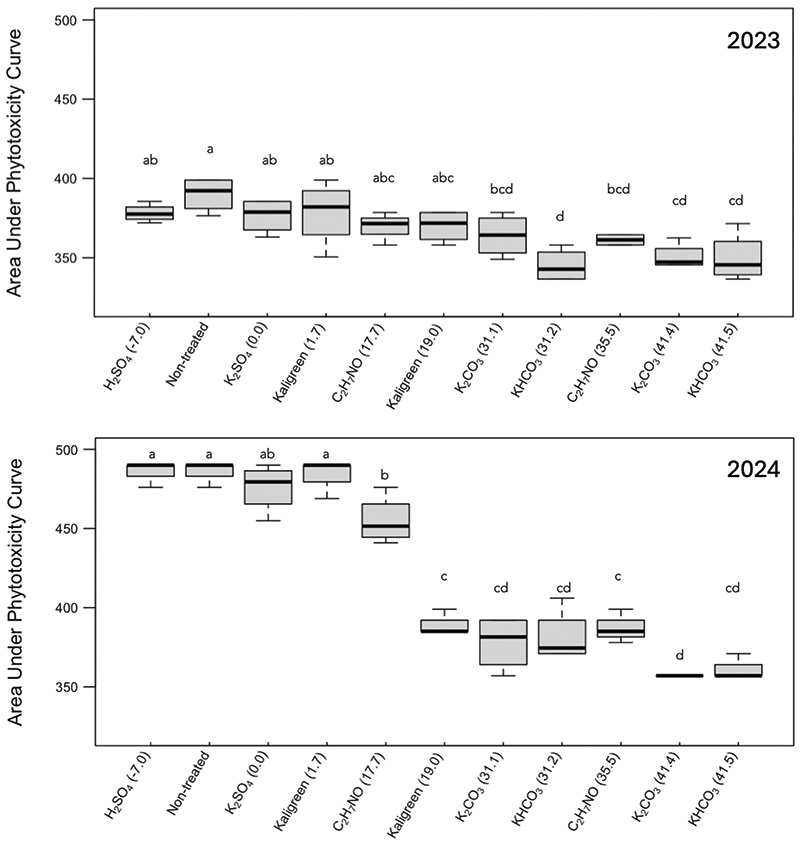
Figure 4. Phytotoxicity in 2023 (top) and 2024 (bottom) in the Product Comparison Study as represented by area under the phytotoxicity curve (AUPC). Treatments on the x-axis are shown in increasing order of alkalinity. Higher values represent less phytoxicity (i.e. greener turf color) while lower values reflect greater phytotoxic damage. Numbers in parentheses indicate the alkalinity calculated as kilograms per hectare of CaCO3-equivalent. KHCO3=potassium bicarbonate, K2CO3=potassium carbonate, C2H7NO=ethanolamine, H2SO4=sulfuric acid 2N concentration, and K2SO4=potassium sulfate. Treatments sharing the same letter above the column are not significantly different based on Tukey’s HSD test (P < 0.05).
Soil pH results
At the end of the 2023 season, soil analysis reported a 7.1 mean soil pH of the non-treated control plots, which was lower than the pH measured in any of the treated plots, including those receiving the sulfuric acid treatment. In 2024, pre-treatment soil testing in May confirmed the trends observed from the previous year. Samples collected in August of 2024 revealed that soil pH decreased across all treated plots, regardless of treatment alkalinity, compared to earlier in the year. These results suggest that repeated foliar alkaline applications do not exert a lasting influence on soil pH.
Conclusion
The results presented here clearly demonstrate that repeated foliar applications of alkaline substances can significantly suppress dollar spot on fairway-height turfgrass without long-term damage to the plants. Across two growing seasons, treatments delivering ≥0.61 pound per 1,000 square feet (≥30 kilograms per hectare) CaCO₃-equivalent alkalinity consistently reduced dollar spot by over 90% relative to the non-treated control. To our knowledge, this is the first study in turfgrass demonstrating that alkaline products can effectively suppress dollar spot on turfgrass. While the mechanism for the role that alkaline substances plays in suppressing dollar spot remains unclear, pairing these results with previous laboratory research suggests that the dollar spot fungus prefers an acidic leaf surface pH to initiate infection, and the metabolic cost of acidifying a highly alkaline leaf surface may exhaust the fungus and not allow it to infect.
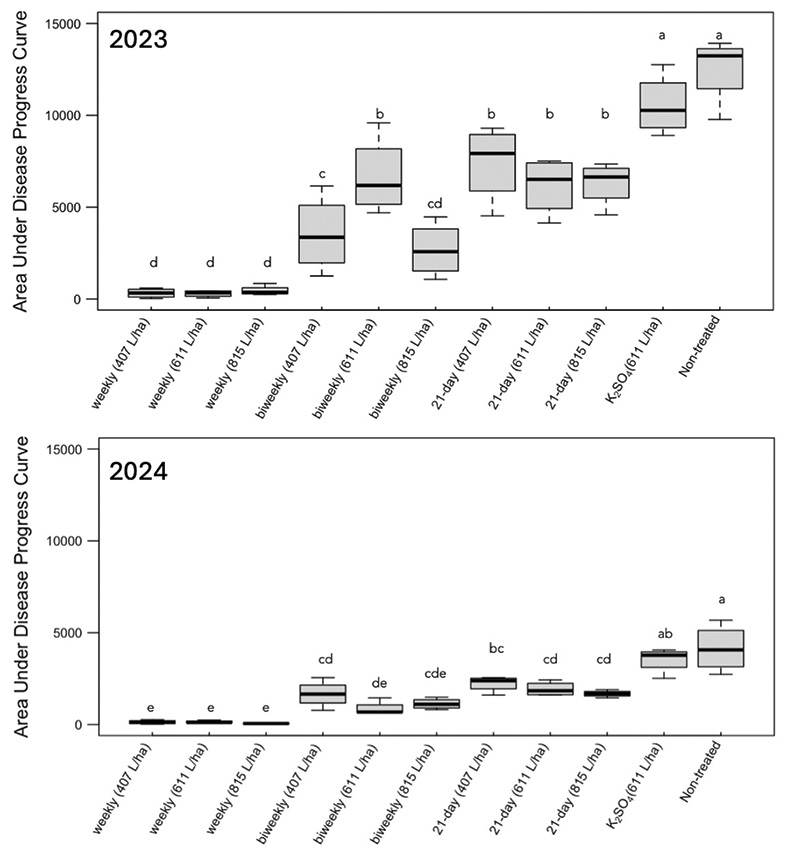
Figure 5. Dollar spot severity in 2023 (top) and 2024 (bottom) in the Application Optimization Study as represented by area under the disease progress curve (AUDPC). Numbers in parentheses denote spray volume in liters per hectare. Treatments with the same letter above the column are not significantly different based on Tukey's HSD test (P < 0.05).
Despite these encouraging results, a significant concern identified with this research was the onset of phytotoxicity that occurred following application of alkaline products. While no long-term effects such as wilting or thinning of the turfgrass were noted despite two years of applications to the same plots, the phytotoxicity that occurs for the two to three days following application would be considered commercially unacceptable by most turfgrass managers and prevents the immediate use of alkaline products to suppress dollar spot by superintendents. Future research in this area should assess additional rates of alkaline products to identify precise levels of leaf surface pH that balance dollar spot suppression and phytotoxicity and mix alkaline products with various adjuvants that may reduce the level of phytotoxicity. If strategies can be developed that maintain the levels of dollar spot suppression demonstrated here while reducing phytotoxicity it may result in a significant new tool for integrated dollar spot management.
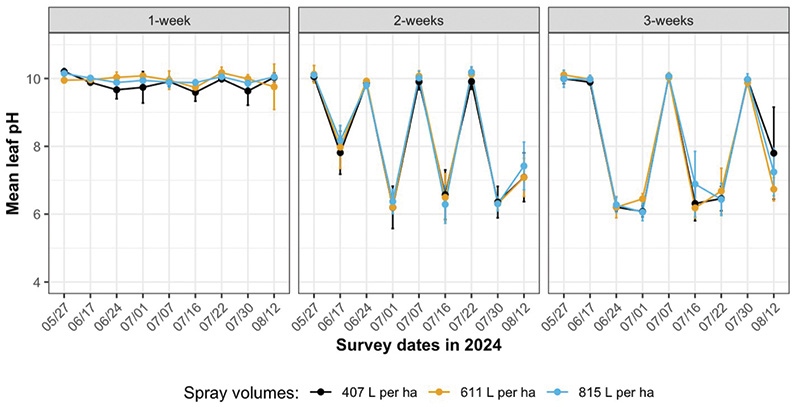
Figure 6. Leaf surface pH measured weekly in 2024 in the Application Optimization Study in response to reapplication intervals of one, two or three weeks and spray volume of 0.5, 1.0, and 1.5 gallons of water per 1,000 square feet. All treatments received potassium bicarbonate at 1.7 pounds per 1,000 square feet.
The research says
- Repeated foliar applications of alkaline substances can significantly suppress dollar spot on fairway-height turfgrass without long-term damage to the plants.
- Pairing these results with previous laboratory research suggests that the dollar spot fungus prefers an acidic leaf surface pH to initiate infection, and the metabolic cost of acidifying a highly alkaline leaf surface may exhaust the fungus and not allow it to infect.
- Despite these encouraging results, a significant concern identified with this research was the onset of phytotoxicity that occurred following application of alkaline products.
- While no long-term effects such as wilting or thinning of the turfgrass were noted despite two years of applications to the same plots, the phytotoxicity that occurs for the two to three days following application would be considered commercially unacceptable by most turfgrass managers and prevents the immediate use of alkaline products to suppress dollar spot by superintendents.
- Future research in this area should assess additional rates of alkaline products to identify precise levels of leaf surface pH that balance dollar spot suppression and phytotoxicity and mix alkaline products with various adjuvants that may reduce the level of phytotoxicity.
- If strategies can be developed that maintain the levels of dollar spot suppression demonstrated here while reducing phytotoxicity it may result in a significant new tool for integrated dollar spot management.
Literature cited
- Horst, R.K., S.O. Kawamoto and L.L. Porter. 1992. Effect of sodium bicarbonate and oils on the control of powdery mildew and black spot of roses. Plant Disease 76:247-251 (https://doi.org/10.1094/PD-76-0247).
- Kabbage, M., B. Williams and M.B. Dickman. 2013. Cell death control: The interplay of apoptosis and autophagy in the pathogenicity of Sclerotinia sclerotiorum. PLoS Pathogens 9:e1003287 (https://doi.org/10.1371/journal.ppat.1003287).
- Kumari S., P. Tayal, E. Sharma and R. Kapoor. 2014. Analyses of genetic and pathogenic variability among Botrytis cinerea isolates. Microbiology Research 169:862-872.
- Ryan, C.P., P.H. Dernoeden, A.P. Grybauskas and B. Momen. 2011. Influence of summer spoonfeeding six nitrogen sources on dollar spot severity and chlorothalonil efficacy in creeping bentgrass. Applied Turfgrass Science (https://doi.org/10.1094/ATS-2011-1223-02-RS).
- Ryan, C.P., P.H. Dernoeden and A.P. Grybauskas. 2012. Seasonal development of dollar spot epidemics in six creeping bentgrass cultivars in Maryland. HortScience 47(3):422-426.
- Townsend, R.V., R.A. Rioux, M. Kabbage, C. Stephens, J.P. Kerns and P. Koch. 2020. Oxalic acid production in Clarireedia jacksonii is dictated by pH, host tissue, and xylan. Frontiers in Microbiology 11:1732.
- Townsend, R.V., M.D. Millican, D. Smith, E. Nangle, K. Hockemeyer, D. Soldat and P.L. Koch. 2021. Dollar spot suppression on creeping bentgrass in response to repeated foliar nitrogen applications. Plant Disease 105: 276-284 (https://doi.org/10.1094/PDIS-05-20-1031-RE).
- Ziv, O., and A. Hagiladi. 1993. Controlling powdery mildew in euonymous with polymer coatings and bicarbonate solutions. HortScience 28(2), 124-126.
Paul L. Koch (plkoch@wisc.edu) is professor and chair of the Department of Plant Pathology and the Molecular and Environmental Toxicology Center, Zoltan Banyai is a former graduate student and currently the superintendent at TwinEagles Club in Naples, Fla., and Kurt Hockemeyer is turfgrass diagnostic lab manager in the Koch Lab, all in the Department of Plant Pathology, University of Wisconsin-Madison; Doug J. Soldat is professor and chair of Soil Science Extension in the Department of Soil and Environmental Science, University of Wisconsin-Madison.