The latest Golf Course Environmental Profile Survey shows pest management practices have evolved, but several opportunities for improvement remain. Adobe Stock photo
Golf course superintendents are often judged by golfer satisfaction, yet the golfer experience is influenced by far more than course maintenance. Research by the United States Golf Association identified more than 1,000 golfer touch points, with pace of play and course conditioning emerging as two of the strongest drivers of satisfaction (1, 8). While many aspects of the golfer experience fall under the responsibility of golf professionals, club managers or owners, superintendents directly influence course conditioning through integrated programs of mowing, irrigation, fertility, cultivation and pest management.
Golfers rarely notice whether a superintendent has implemented exemplary nutrient, irrigation or pesticide best management practices (BMPs). Instead, they evaluate the results of those practices through smooth putting greens, healthy turf, consistent lies, attractive bunkers and an overall sense that the course is well maintained. Collectively, these outcomes are achieved through an integrated program of mowing, irrigation, fertility, cultivation and pest management. Of these, pest management is unique because its success is often measured by the absence of problems. Golfers rarely notice when weeds, diseases or insect pests are effectively controlled, but they readily recognize the decline in aesthetics and playability when pest outbreaks occur or weeds invade. Consequently, superintendents employ pest management strategies to better improve course conditioning that results, in part, in golfer satisfaction.
Integrated pest management (IPM) is a cornerstone of golf course maintenance BMPs, providing a systematic, science-based framework for managing weeds, insects, diseases and other pests while protecting turf quality and minimizing environmental risk. Modern IPM is built on five fundamental principles: (1) implementing routine monitoring and scouting programs; (2) accurately identifying pests, their hosts and beneficial organisms; (3) establishing action thresholds that define when intervention is needed; (4) selecting the most appropriate combination of cultural, biological, mechanical and chemical control strategies; and (5) evaluating and documenting outcomes to promote continuous improvement and more efficient use of labor, pesticides and other resources (13). Rather than reliance on pesticide applications, IPM emphasizes prevention through sound agronomic practices that promote healthy, resilient turf capable of tolerating pest pressure with fewer chemical inputs.
Documenting pest management practices is essential for evaluating industry progress, identifying emerging trends and guiding the development and adoption of science-based BMPs. Since 2005, the GCSAA has benchmarked environmental stewardship and management practices on U.S. golf courses through the Golf Course Environmental Profile Survey Series. These nationally representative surveys provide valuable insight into how golf facilities manage water, nutrients, energy and pests, while documenting changes in management practices over time.
Previous GCEP surveys characterized pest management practices in 2007 (7), 2015 (4), and 2021 (10). To continue tracking industry progress, GCSAA conducted a fourth national survey in 2024. This article summarizes current pest management practices on U.S. golf courses and evaluates changes since 2007, with particular emphasis on the adoption of pest management practices and features related to pesticide storage, mixing and loading infrastructure.
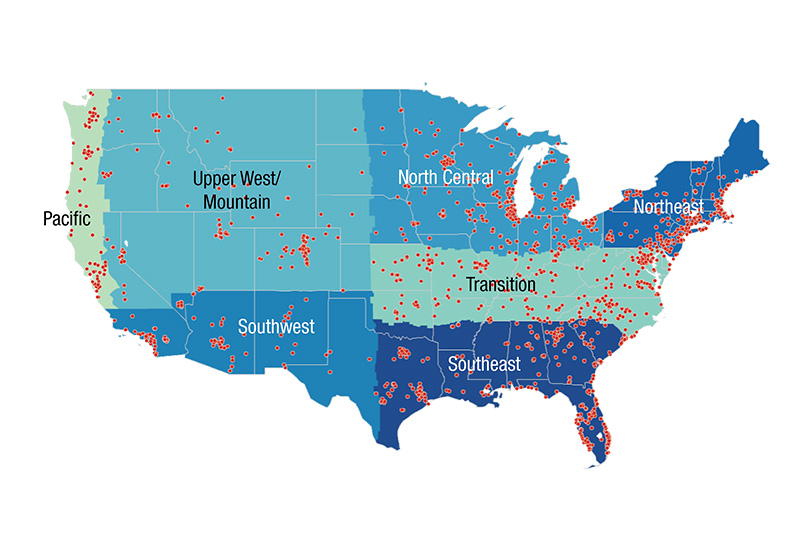
Figure 1. Distribution of the 2024 survey and the seven agronomic regions.
Methodology
To ensure direct comparisons with previous GCEP surveys, the 2024 questionnaire remained unchanged from prior survey cycles. The survey was distributed electronically to 14,033 unique U.S. golf facilities using mailing lists maintained by the National Golf Foundation and GCSAA, with additional promotion through GCSAA social media channels. A golf facility was defined as any business operating one or more golf courses. The survey was available for 14 weeks beginning Sept. 29, 2025, and all responses were collected anonymously using unique identification numbers.
A total of 1,499 facilities completed the survey, representing 10.7% of the known U.S. golf facility population. Survey responses were combined with data collected from the three prior surveys to evaluate changes in pest management practices over time. Respondents were assigned to one of seven agronomic regions (Figure 1), and results were weighted to provide nationally representative estimates based on facility type (public or private), number of holes (9, 18, or 27-plus), and public green fee (<$55 or ≥$55 per round), resulting in 35 weighting categories. Changes in pest management practices were evaluated by comparing the number of facilities that reported increasing their use of a practice with those reporting a decrease since the previous survey. For each practice, results are presented as the percentage of golf facilities that reported using it sometimes or frequently. Likewise, pesticide storage, mixing and loading features were recorded as either present or absent and are summarized as the percentage of facilities with each feature. National estimates and response frequencies were calculated using weighted data, and differences among survey years were evaluated using chi-square (χ²) tests with statistical significance declared at P ≤ 0.10.
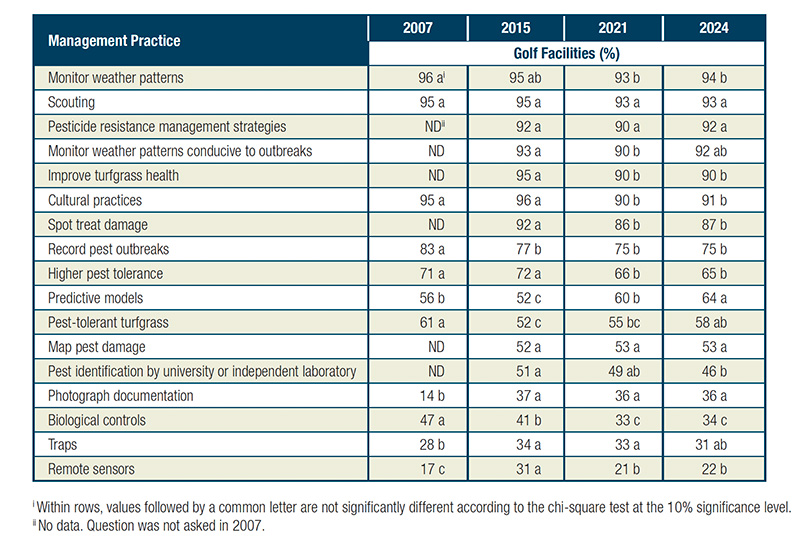
Table 1. Frequency of U.S. golf facilities that responded that they use the listed pest management practice sometimes or frequently in 2007, 2015, 2021 and 2024.
Results and discussion
Framing the results from the GCEP Pest Management Survey around the five IPM principles helps to evaluate how well the golf course management industry is implementing IPM and provides insight into where opportunities for continuous improvement can be made.
Principle 1 – Implementing routine monitoring and scouting programs
Routine monitoring remains the strongest and most consistently adopted component of IPM on U.S. golf courses. Monitoring weather patterns (94%), scouting (93%) and monitoring weather conditions conducive to pest outbreaks (92%) were among the most frequently reported pest management practices (Table 1). While traditional scouting remains the cornerstone of monitoring programs, adoption of decision-support technologies has increased over time. Use of predictive models increased from 56% in 2007 to 64% in 2024; photographic documentation more than doubled; and remote sensing technologies increased from 17% to 22%, demonstrating a gradual transition toward more data-driven pest monitoring. About one-third of U.S. golf facilities reported using traps, which often serve as an early warning system.
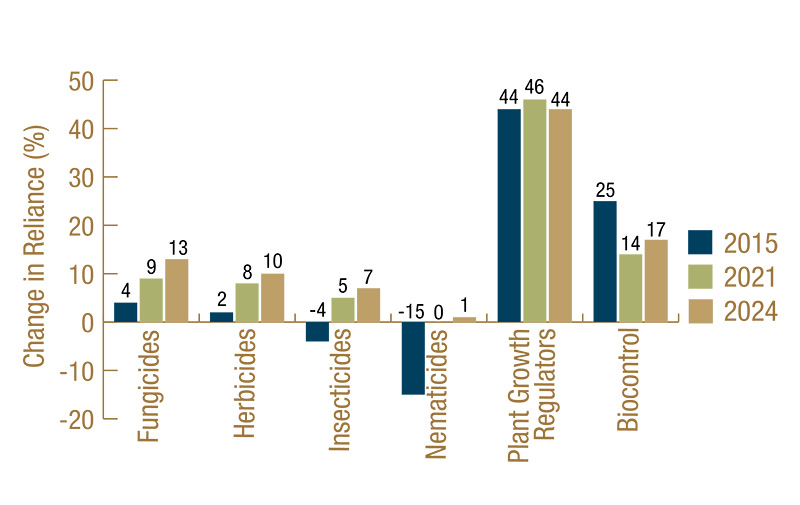
Figure 2. Reliance of U.S. golf facilities on pest management practices during the three years prior to 2015, 2022 and 2024.
Principle 2 – Accurately identifying pests, their hosts and beneficial organisms
Accurate pest identification is the foundation of effective IPM because successful management depends on correctly diagnosing the pest before selecting a control strategy. The survey indicates that 46% of respondents reported using university or independent diagnostic laboratories to assist with pest identification (Table 1). The use of traps for monitoring can aid in insect identification as traps often have a degree of specificity to certain insects (e.g., sex pheromones are insect specific), whereas light traps attract many flying insects, which may be either harmful or beneficial.
Although laboratory diagnostics declined slightly compared with previous surveys, facilities increasingly incorporated technologies that improve documentation and diagnosis. These included photographic documentation, which increased from 14% in 2007 to 36% in 2024, and pest damage mapping, which was used by 53% of facilities. These findings suggest that while formal laboratory confirmation has declined modestly, golf facilities are increasingly integrating digital tools to improve pest identification.
The use of pest-tolerant turfgrasses has remained essentially unchanged (~60%) over the 18 years of monitoring pest management activities on U.S. golf courses. Unlike genetically modified agronomic crops, commercially available Bt (Bacillus thuringiensis) turfgrass cultivars do not yet exist. Glyphosate-tolerant St. Augustinegrass and Kentucky bluegrasses are available, but creeping bentgrass has not been commercialized. Most of the turfgrass breeding efforts in recent years have focused on genetic and genomic resources conferring resistance to diseases (e.g., dollar spot, gray leaf spot and large patch) and insects (e.g., fall armyworm) (6). In time, this research will pay dividends leading to improved turfgrasses tolerant of current pests.
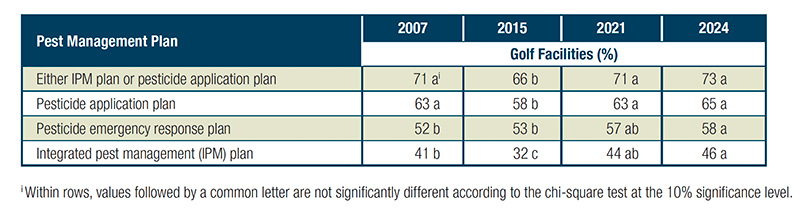
Table 2. Frequency of written pest management plans on U.S. golf facilities in 2007, 2015, 2021 and 2024.
Principle 3 – Establishing action thresholds that define when intervention is needed
A long-running debate in golf course IPM centers on whether traditional economic thresholds used in agricultural commodities can be applied to turf. Many agree they cannot. More recently, turfgrass scientists have advocated for action thresholds that answer the question, “When should I intervene?” The GCEP survey does not directly ask about thresholds. However, increased acceptance of higher pest tolerance (65%) and widespread spot treatment of damage (87%) suggest many facilities are making treatment decisions based on observed pest pressure rather than calendar applications. These two management practices have largely remained unchanged over the past two decades.
Predictive models are increasingly being incorporated into IPM programs to improve the timing and efficiency of pesticide applications. Models that predict turfgrass growth allow managers to better synchronize cultural practices and resource inputs with plant growth, improving overall management efficiency (5, 9). Similarly, weather-based disease-forecasting models identify periods conducive to disease development, enabling superintendents to make more-informed fungicide application decisions and, in many cases, reduce the number of preventive applications while maintaining effective disease control (11).
Ideally, golf course superintendents should establish “decision thresholds” that integrate pest pressure with anticipated impacts on turf quality, playability, golfer expectations, environmental risk and resource availability. This decision-based framework ideally integrates the management practices listed in Table 1 with their site-specific golfer expectations, upcoming events, labor availability, budget and environmental risk.
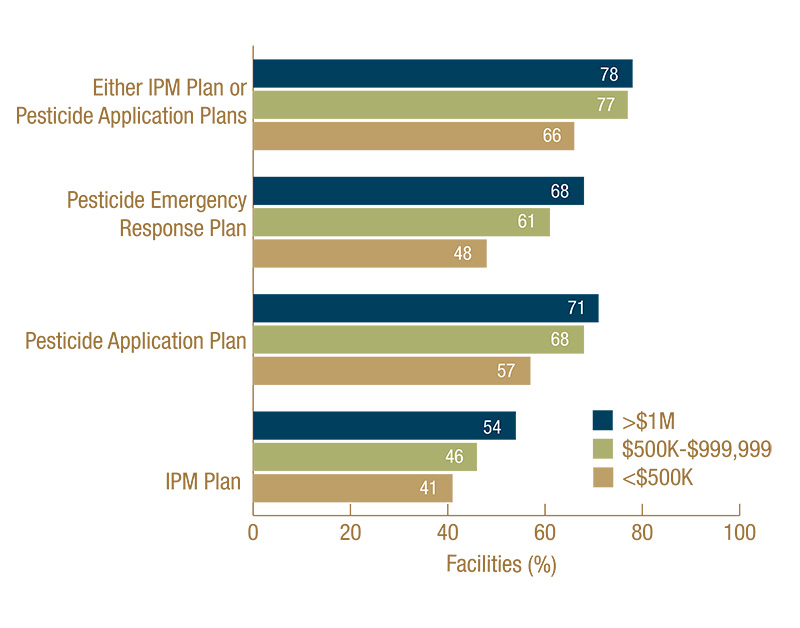
Figure 3. Frequency of written pest management plans on U.S. golf facilities in 2024 as influenced by the facility's annual budget.
Principle 4 – Selecting the most appropriate combination of cultural, biological, mechanical and chemical control strategies
Integrated pest management emphasizes selecting the most appropriate combination of management practices to achieve acceptable pest control while minimizing economic and environmental risk. The survey demonstrates widespread adoption of multiple IPM tools beyond conventional pesticides. Golf course superintendents reported improving turfgrass health (90%), implementing cultural practices (91%) and incorporating pesticide-resistance-management strategies (92%) into their management practices (Table 1).
Long-term trends indicate an increasing reliance on conventional chemical pesticides. Between 2015 and 2024, reliance increased across every major conventional pesticide class, while reliance on biological control products declined nationally from 25% to 17% (Figure 2). Data from the 2024 operating year provides a complementary snapshot of current pest management practices (Table 1). Approximately one-third of facilities reported using biological control agents, while conventional chemical pesticides remained the most widely used pest management tools. Reliance on plant growth regulators remained relatively stable at approximately 44% over the same period.
These findings suggest that although golf facilities continue to integrate multiple management strategies, recent years have seen a shift toward greater reliance on conventional pesticides, potentially reflecting increasing golfer expectations, reduced pest tolerance, labor constraints or inconsistent performance of currently available biological products. Additionally, increased reliance on conventional pesticides could be attributed to the influx of new nematicides in the turfgrass market (2, 3) and the transition from broad-spectrum to narrow-spectrum pesticides (e.g., SDHI fungicides and diamide insecticides). Narrow-spectrum pesticides represent a significant advance in environmental stewardship because these products are generally more selective, have lower mammalian toxicity and reduce impacts on non-target organisms. However, their successful use requires greater reliance on the core principles of IPM.
Table 3. Frequency of mixing and loading area attributes on U.S. golf facilities in 2007, 2015, 2021 and 2024.
Principle 5 – Evaluate and document outcomes to promote continuous improvement
Continuous evaluation and documentation are essential components of IPM because they allow superintendents to assess treatment effectiveness, improve future decision-making and demonstrate regulatory compliance.
An IPM plan is a strategic document that describes how pests will be minimized, monitored and managed while minimizing risks to people and the environment. A pesticide application plan is much narrower in scope, as it documents how pesticides will be used once a decision to treat has been made.
Results from the 2024 GCEP survey show that 46% of facilities reported having a written IPM plan, 65% had a written pesticide application plan, and 73% had either an IPM plan or a pesticide application plan (Table 2). The higher adoption rate of pesticide application plans suggests that many facilities may have formal procedures governing pesticide use, likely driven by regulatory compliance (i.e., required recordkeeping), employee training and risk management. However, fewer than half have adopted a comprehensive written IPM plan that integrates prevention, monitoring, action thresholds and evaluation into a unified pest management strategy. This distinction represents an important opportunity for continued advancement of IPM adoption across the golf industry.
Pesticide emergency response plans prepare staff to respond quickly, safely and effectively to spills, exposures or other emergencies involving pesticide handling, application or storage. A modest increase in pesticide emergency response plans has occurred over the past two decades, increasing from 52% to 58%. This critically important BMP should be adopted by every facility that uses pesticides.
Facility operating budget was positively associated with the adoption of written pest management plans (Figure 3). Facilities with annual budgets exceeding $1 million were more likely than facilities with budgets below $500,000 to maintain a written IPM plan (54% vs. 41%), a pesticide application plan (71% vs. 57%) and a pesticide emergency response plan (68% vs. 48%). Overall, 78% of the highest-budget facilities maintained either a written IPM plan or a pesticide application plan, compared with 66% of facilities operating with budgets below $500,000. These findings suggest that greater financial resources facilitate the development and maintenance of formal planning documents.
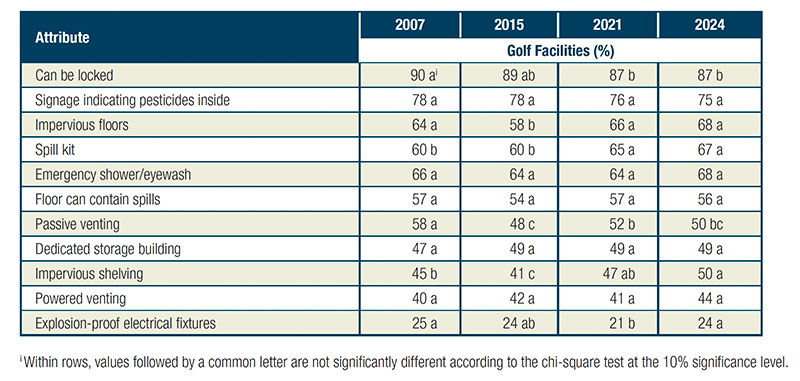
Table 4. Frequency of storage facility attributes on U.S. golf facilities in 2007, 2015, 2021 and 2024.
Pesticide mixing, loading and storage areas
Proper pesticide mixing, loading and storage areas are essential for minimizing environmental risks associated with pesticide use while improving worker safety and operational efficiency. The adoption of pesticide mixing and loading area attributes remained relatively stable between 2007 and 2024, with several features showing small improvements over time (Table 3). By 2024, the most common attributes included spill kits (63%), anti-siphoning devices on water lines (49%), impervious floors (43%), emergency water shut-off valves (38%), floors designed to contain spills (36%), covered mixing areas (32%) and high-capacity water filling systems (30%). These features are intended to minimize the risk of pesticide spills, prevent backflow contamination of water supplies, improve spill containment and enhance worker safety during pesticide handling. Recycling of pesticide containers declined modestly from 35% in 2007 to 31% in 2024, while collection of rinsate remained relatively constant over time.
Although mixing and loading areas receive less attention than pesticide application practices, they represent one of the greatest opportunities to prevent environmental contamination because concentrated pesticides are handled before dilution and application. Properly designed facilities reduce the likelihood of spills, leaks and accidental exposures during handling, mixing, loading and storage, which are the activities that present the greatest risk of pesticide contamination.
The prevalence of pesticide storage facility attributes has also remained relatively stable over the past two decades (Table 4). The most common features in 2024 were lockable storage facilities (87%), pesticide warning signage (75%), impervious floors (68%), emergency shower or eyewash stations (68%), spill kits (67%) and floors designed to contain spills (56%). These features are intended to minimize unauthorized access, reduce environmental contamination, facilitate spill response and protect worker safety during pesticide storage and handling.
Intuitively, golf facilities with annual operating budgets exceeding $1 million reported a higher prevalence of nearly every attribute related to pesticide storage and mixing/loading facility than facilities with annual budgets below $500,000 (data not presented). Larger operating budgets likely provide greater capacity to invest in infrastructure. Although construction of dedicated pesticide storage buildings and mixing/loading facilities can require substantial capital investment, many important improvements can be incorporated into existing facilities at relatively low cost. Examples include installing impervious floor coatings, anti-siphoning devices, emergency water shut-offs, eyewash stations and spill response kits. Ultimately, investments in pesticide handling infrastructure should be evaluated not only in terms of their initial cost but also in light of their long-term benefits in reducing environmental liability, protecting employee health and safety, and supporting responsible pesticide stewardship.
These findings reinforce that effective IPM extends beyond pest management decisions to include the infrastructure that enables pesticides to be handled, mixed, stored and applied safely. Continued investment in pesticide handling facilities represents an important component of environmental stewardship and operational risk management on golf courses.
Conclusions and recommendations
Over the past two decades, U.S. golf facilities have made progress implementing many of the core principles of IPM. Routine scouting, weather monitoring, cultural practices, resistance management and documentation are standard practices on most golf courses. However, the survey also highlights an important disconnect. While adoption of many IPM practices remains high, reliance on conventional pesticides has increased since 2015. These trends suggest that IPM has become an effective framework for making pesticide applications more efficient rather than reducing dependence on pesticides themselves.
The GCEP Survey results demonstrate opportunities to strengthen the administrative foundation of IPM. Fewer than half of facilities maintain a comprehensive written IPM plan despite widespread adoption of individual IPM practices. Developing written plans that incorporate prevention, monitoring, action thresholds, evaluation and continuous improvement would help transform individual management practices into a cohesive decision-making system while improving communication among staff, facility leadership, regulators and golfers. The GCSAA offers excellent IPM resources on its website: https://bit.ly/4zB2MRi.
The next generation of golf course IPM should move beyond simply improving pesticide application decisions and toward reducing the reliance upon pesticide applications. Prevention has always been the foundation of IPM. Likewise, decision-making should continue evolving from calendar-based or prophylactic pesticide programs toward integrated, data-driven management. Advances in weather forecasting, disease prediction models, remote sensing, soil moisture monitoring, pest mapping and digital recordkeeping provide superintendents with unprecedented opportunities to establish meaningful decision thresholds that integrate pest pressure, environmental conditions, golfer expectations, labor availability and economic considerations before initiating pesticide applications. The goal should not simply be to apply pesticides more precisely, but to establish decision criteria that allow for pesticide use only when deemed essential.
A USGA survey highlights an interesting perspective among golf course superintendents (12). Although meeting “golfer expectations” ranked only fourth among the greatest management challenges, nearly one-half (45%) identified maintaining golf course conditions as the single-most-important factor guiding management decisions. Fiscal responsibility ranked second (33%), followed by golfer experience (16%) and environmental sustainability (6%). These findings suggest that superintendents view high-quality course conditions as the primary means of meeting golfer expectations, even though the overall golfer experience is influenced by many factors beyond turf quality (1).
When asked which best management practices (BMPs) most improve playing conditions, superintendents ranked putting green construction techniques highest (19.5%), followed by improved turfgrass cultivars (17.0%), soil moisture sensors (17.0%), ET-based irrigation scheduling (12.6%), fertilizer and pesticide BMPs (8.4%) and naturalized rough areas (4.4%).
Superintendents ranked the same practices similarly for their influence on golfer satisfaction, although the perceived impacts were consistently lower. Putting green construction techniques again ranked first (15.5%), followed by improved turfgrass cultivars (14.5%), soil moisture sensors (12.7%), ET-based irrigation scheduling (9.2%), fertilizer and pesticide BMPs (5.4%) and naturalized rough areas (5.0%).
An important lesson emerges from these results. Golfers rarely recognize the individual management practices that superintendents implement. Instead, golfers recognize the quality of the playing conditions those practices produce. Practices such as irrigation scheduling, soil moisture monitoring, nutrient stewardship and IPM may not be obvious to golfers, but they collectively produce the healthy, resilient turf that delivers smooth greens, consistent lies and attractive playing surfaces. Consequently, the value of IPM should not be judged solely by the number of pesticide applications made or avoided, but by its ability to consistently deliver exceptional course conditions while minimizing economic and environmental risk and preserving the long-term sustainability of the golf course.
The importance of IPM plans
The GCEP Survey results also demonstrate opportunities to strengthen the administrative foundation of IPM. Fewer than half of facilities maintain a comprehensive written IPM plan despite widespread adoption of individual IPM practices.
Developing written plans that incorporate prevention, monitoring, action thresholds, evaluation and continuous improvement would help transform individual management practices into a cohesive decision-making system while improving communication among staff, facility leadership, regulators and golfers.
The research says
- The GCEP Survey results demonstrate opportunities to strengthen the administrative foundation of IPM.
- Fewer than half of facilities maintain a comprehensive written IPM plan despite widespread adoption of individual IPM practices.
- Developing written plans that incorporate prevention, monitoring, action thresholds, evaluation and continuous improvement would help transform individual management practices into a cohesive decision-making system while improving communication among staff, facility leadership, regulators and golfers.
- The next generation of golf course IPM should move beyond simply improving pesticide application decisions and toward reducing the reliance upon pesticide applications.
- The value of IPM should not be judged solely by the number of pesticide applications made or avoided, but by its ability to consistently deliver exceptional course conditions while minimizing economic and environmental risk and preserving the long-term sustainability of the golf course.
Funding
The fourth phase of the Golf Course Environmental Profile was conducted with funding provided by GCSAA.
Additional information
All GCEP surveys are published in peer-reviewed scientific journals including Crop, Forage and Turfgrass Management (previously Applied Turfgrass Science) (https://acsess.onlinelibrary.wiley.com/journal/23743832) and HortTechnology (https://journals.ashs.org/horttech/view/journals/horttech/horttech-overview.xml). Abbreviated results are published in GCM magazine (https://gcmonline.com), and full reports including all the data are available online (https://www.gcsaa.org/Environment/golf-course-environmental-profile).
Literature cited
- Brey, E.T., and K. Schoonover. 2020. What a golfer really wants. United States Golf Association Green Section Record (https://www.usga.org/content/usga/home-page/course-care/green-section-record/58/21/what-a-golfer-really-wants-.html) [accessed 28 July 2026].
- Crow, W.T., J.O. Becker and J.H. Baird. 2017. New golf course nematicides. Golf Course Management (http://archive.lib.msu.edu/tic/gcman/article/2017jul.pdf) [accessed 28 July 2026].
- Crow, W.T. 2020. Nematode management for golf courses in Florida (https://edis.ifas.ufl.edu/pdf/IN/IN12400.pdf) [accessed 28 July 2026].
- Gelernter, W.D., L.J. Stowell, M.E. Johnson and C.D. Brown. 2016. Documenting trends in pest management practices on US golf courses. Applied Turfgrass Science (https://doi.org/10.2134/cftm2016.04.0032).
- Kreuser, W.C, J.R. Young and M.D. Richardson. 2017. Modeling performance of plant growth regulators. Agricultural and Environmental Letters 1-4 (https://doi.org/10.2134/ael2017.01.0001).
- Lee, S.H., P. Purushotham, P.A. Boeri, A. Chandra and J. Murukarthick. 2025. Genetic and genomic resources for turfgrasses: Status, applications, and prospects. Theoretical and Applied Genetics 138, 271 (https://doi.org/10.1007/s00122-025-05054-z).
- Lyman, G.T., M.E. Johnson, G.A. Stacey and C.D. Brown. 2012. Golf course environmental profile measures pesticide use practices and trends. Applied Turfgrass Science (https://doi.org/10.1094/ATS-2012-1220-01-RS).
- Pierce, D. 2021. A new way to classify golf courses to improve golfer satisfaction. United States Golf Association Green Section Record (https://www.usga.org/content/usga/home-page/course-care/green-section-record/59/14/a-new-way-to-classify-golf-courses-to-improve-golfer-satisfactio.html) [accessed 28 July 2026].
- Reasor, E.H., J.T. Brosnan, J.P. Kerns, W.J. Hutchens, D.R. Taylor, J.D. McCurdy, D.J. Soldat and W.C. Kreuser. 2018. Growing degree day models for plant growth regulator applications on ultradwarf hybrid bermudagrass putting greens. Crop Science 58:1801-1807 (https://doi.org/10.2135/cropsci2018.01.0077).
- Shaddox, T.W., J.B. Unruh, M.E. Johnson, C.D. Brown and G. Stacey. 2023. Survey of Pest Management Practices on US Golf Courses. HortTechnology 33(2):152-156 (https://doi.org/10.21273/HORTTECH05117-22).
- Smith, D.L., J.P. Kerns, N.R. Walker, A.F. Payne, B. Horvath, J.C. Inguagiato, J.E. Kaminski, M. Tomaso-Peterson and P.L. Koch. 2018. Development and validation of a weather-based warning system to advise fungicide applications to control dollar spot on turfgrass. PLoS ONE 13(3):e0194216 (https://doi.org/10.1371/journal.pone.0194216).
- Thompson, C., D. Kridel and M. Kenna. 2023. The value of turfgrass research. United States Golf Association Green Section Record (https://www.usga.org/content/usga/home-page/course-care/green-section-record/61/issue-19/the-value-of-turfgrass-research.html) [accessed 28 July 2026].
- Virginia GCSAA. Environmental Best Management Practices for Virginia’s Golf Courses (https://vgcsabmp.org/) [accessed 28 July 2026].
J. Bryan Unruh, Ph.D., (jbu@ufl.edu) is a professor and associate center director at the University of Florida, Institute of Food and Agricultural Sciences’ West Florida Research and Education Center in Jay, Fla. Travis Shaddox, Ph.D., is president of Bluegrass Art and Science LLC, Lexington, Ky.